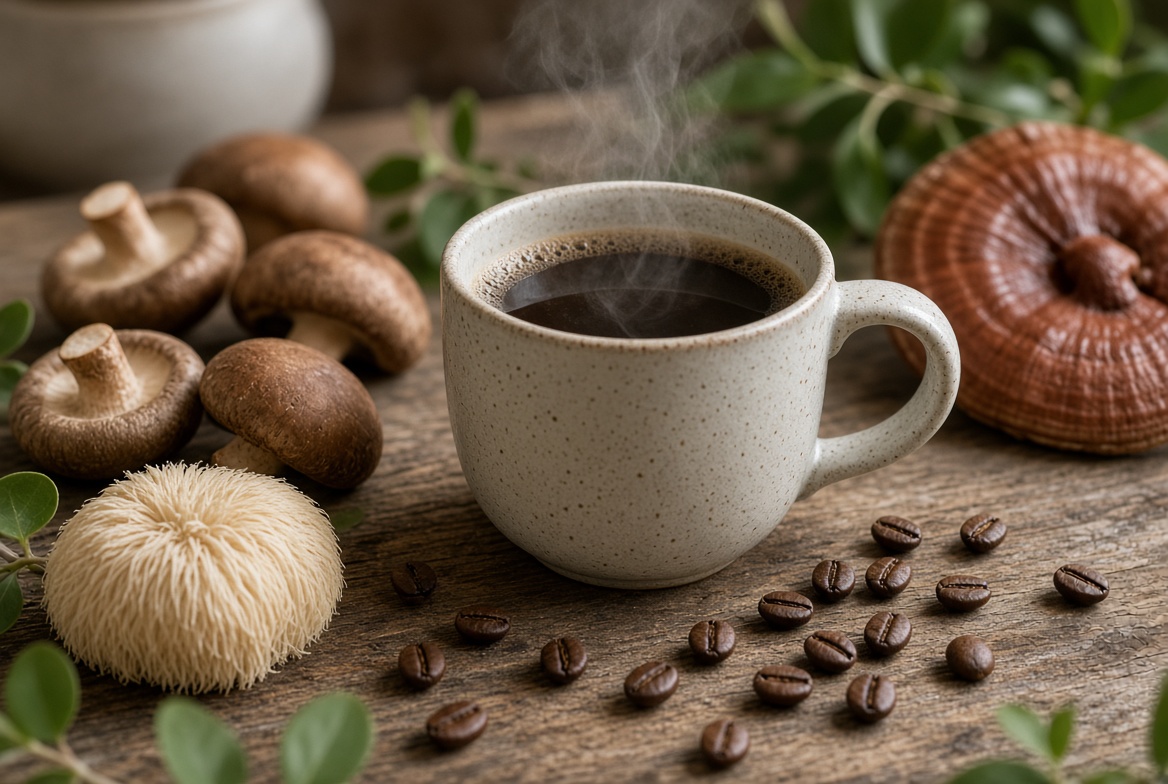
If you have spent any time browsing wellness feeds, visiting modern cafes, or listening to health podcasts lately, chances are you have stumbled across a dark, aromatic brew promising a completely different kind of morning ritual. It looks like coffee, brews like coffee, and pours into your favorite mug just like your beloved morning roast. Yet, it claims to harness the ancient power of functional fungi to elevate your mind, soothe your digestion, and redefine your daily energy levels.
If you are currently holding your traditional mug and asking yourself, what’s the deal with mushroom coffee, you are certainly not alone. The trend has taken the global health and wellness community by storm, leaving many curious drinkers wondering whether this is a legitimate nutritional breakthrough or simply clever marketing wrapped in a cozy aesthetic.
What Is Mushroom Coffee, Exactly?
To demystify this modern wellness phenomenon, we need to begin with the basics. The truth about mushroom coffee is far more approachable and delicious than most people initial imagine.
When newcomers first hear the term, their minds often jump to a bizarre image: floating sliced portobellos, button mushrooms steeped in hot water, or a savory, broth-like liquid that tastes like soup. Thankfully, the reality of functional mixology is vastly different!
Mushroom coffee is crafted by taking functional, non-psychedelic medicinal fungi, drying them, putting them through a delicate extraction process to unlock their beneficial compounds, and pulverizing them into an ultra-fine, soluble powder. This concentrated extract is then seamlessly blended with ground or instant coffee beans.
The resulting mixture dissolves smoothly in hot water, yielding a dark, rich beverage that tastes remarkably like standard coffee, usually accompanied by a subtle, smooth, earthy undertone.
Does Mushroom Coffee Have Coffee in It?
One of the most persistent misunderstandings surrounding this beverage centers on its base ingredients. Many people who want to reduce their caffeine intake ask: does mushroom coffee have coffee in it?
The short answer is: yes, most commercial mushroom coffee blends do contain real coffee.
The majority of popular brands combine equal parts of shade-grown Arabica or Robusta coffee beans with dual-extracted mushroom powders. Medicinal mushrooms themselves—such as Lion’s Mane, Reishi, Chaga, and Cordyceps—naturally contain zero caffeine. Therefore, any caffeine present in your cup comes directly from the roasted coffee beans included in the blend.
Understanding the Caffeine Difference
Because coffee beans are typically diluted with functional fungal extracts, a cup of mushroom coffee contains significantly less caffeine than a standard cup of traditional black coffee:
-
Standard Brewed Coffee (8 oz): ~95 mg to 150 mg of caffeine.
-
Mushroom Coffee Blend (8 oz): ~40 mg to 50 mg of caffeine (roughly half the amount).
-
Caffeine-Free Herbal Mushroom Alternatives: 0 mg of caffeine (these use roasted chicory root, dandelion root, or cacao as a base instead of coffee beans).
This balanced ratio makes it an ideal choice for individuals who love the comforting ritual, rich flavor, and gentle kick of coffee, but suffer from high caffeine sensitivity, heart palpitations, or sleep disturbances.
How Does Mushroom Coffee Work?
To understand how this unique beverage interacts with your body, we have to explore the science of functional mushrooms and how they harmonize with caffeine.
When asking how does mushroom coffee work, the secret lies in the dynamic synergy between central nervous system stimulation and cellular adaptogenesis.
The Role of Adaptogens
Functional mushrooms belong to a special class of botanicals known as adaptogens. Adaptogens are natural substances that assist the human body in adapting to biological, environmental, and emotional stressors. Rather than forcing a physiological process in one direction, adaptogens act as biological modulators, helping to stabilize your endocrine system and restore homeostatic balance.
When you drink standard coffee, caffeine rapidly blocks adenosine receptors in your brain, preventing you from feeling tired while simultaneously triggering a surge of cortisol and adrenaline. This can put your nervous system into a subtle “fight-or-flight” state.
When caffeine is paired with adaptogenic fungal extracts, the active compounds in the mushrooms—such as beta-glucans, triterpenes, and polyphenols—help buffer this adrenal surge, smoothing out the neurochemical reaction and protecting your body from over-stimulation.
Does Mushroom Coffee Give You Energy?
This brings us to the core question that every tired morning seeker wants answered: does mushroom coffee give you energy?
The resounding answer is yes, but it delivers a fundamentally different type of energy than traditional coffee.
Standard Energy vs. Adaptogenic Energy
-
Traditional Coffee Energy: Imagine pressing down hard on your vehicle’s accelerator pedal while in park. You experience a rapid, dramatic spike in RPMs, accompanied by high engine heat (cortisol elevation), jittery hands, and heightened anxiety. However, once that initial caffeine burst burns off, you experience a precipitous crash that leaves you feeling more exhausted than before.
-
Mushroom Coffee Energy: Imagine cruise control on a high-end luxury vehicle. The moderate dose of caffeine provides a gentle, immediate awakening, while mushroom species like Cordyceps enhance cellular ATP (adenosine triphosphate) production and improve oxygen utilization at the cellular level. Concurrently, Lion’s Mane stimulates Nerve Growth Factor (NGF) to sharpen mental focus.
The result is a clean, sustained, and calm state of alertness that lasts for hours without the sudden afternoon drop-off or nervous tremors.
Why Do People Drink Mushroom Coffee?
With so many beverage options available today, why do people drink mushroom coffee consistently over traditional alternatives? The shift is driven by a desire for holistic wellness, improved daily performance, and better stress management.
Here are the primary reasons functional fungi have earned a permanent spot on pantry shelves worldwide:
1. Sharper Cognitive Focus Without Brain Fog
Species like Lion’s Mane (Hericium erinaceus) contain neuroactive compounds that support neuroplasticity, memory retention, and executive brain function. Drinkers report feeling mentally clear, centered, and capable of deep focus without the scattered restlessness caused by high caffeine doses.
2. Gentler Impact on Gastric Health
Regular coffee is highly acidic and can cause stomach lining irritation, acid reflux, and digestive discomfort. Functional mushroom extracts are naturally alkaline and packed with prebiotic fibers that support a healthy gut microbiome, making the brew significantly kinder to sensitive digestive tracts.
3. Stress Regulation and Adrenal Protection
Adaptogens like Reishi (Ganoderma lucidum) interact with the hypothalamic-pituitary-adrenal (HPA) axis to modulate the body’s primary stress hormone, cortisol. Reishi acts as a calming anchor, ensuring you stay alert yet emotionally tranquil throughout demanding workdays.
4. Immune System Support
Species such as Chaga (Inonotus obliquus) and Turkey Tail are rich in immunomodulatory beta-glucans and antioxidants. Drinking them daily provides continuous background support for your immune defenses, helping your body combat oxidative stress and cellular fatigue.
Side-by-Side Comparison
To help you decide if this functional alternative aligns with your personal wellness goals, examine how traditional coffee stacks up against a functional mushroom blend:
| Feature / Metric | Traditional Black Coffee | Functional Mushroom Coffee Blend |
| Caffeine per Serving | 95 mg – 150 mg | 40 mg – 50 mg (Reduced dose) |
| Energy Profile | Rapid spike followed by potential crash | Smooth, sustained, long-lasting alertness |
| Nervous System Response | Can trigger cortisol surges & jitters | Buffered by adaptogens for calm focus |
| Gastrointestinal Impact | High acidity; can irritate stomach lining | Alkaline buffering; prebiotic gut support |
| Primary Functional Compounds | Caffeine, chlorogenic acid | Caffeine, beta-glucans, hericenones, triterpenes |
| Taste Profile | Bold, bitter, roasted flavor | Smooth, rich coffee taste with subtle earthy notes |
How to Choose the Right Mushroom Coffee
If you are ready to make the switch, selecting a high-quality product is essential to experiencing genuine functional benefits:
-
Look for Dual-Extracted Fruiting Bodies: Ensure the label explicitly states the use of 100% mushroom “fruiting bodies” rather than mycelium grown on grain. Dual-extraction (using hot water and alcohol) guarantees that both water-soluble polysaccharides and fat-soluble triterpenes are fully bioavailable.
-
Check the Ingredient Transparency: Quality brands clearly state the exact milligram dosage of mushroom extracts per serving (typically 500 mg to 1500 mg per cup) alongside the caffeine content.
-
Start Mindfully: Replace your second or third cup of regular coffee with a mushroom blend to evaluate how your nervous system and digestion respond to lower caffeine levels paired with adaptogens.
Final Thoughts
Mushroom coffee is far more than a passing internet obsession. By harmonizing the comforting taste and immediate alertness of real coffee beans with the time-tested, stress-balancing power of functional adaptogens, it offers a smarter, kinder way to energize your daily life.
If you are looking to step off the caffeine rollercoaster, nourish your digestion, and enjoy clear, calm mental focus, inviting functional fungi into your morning routine might just be the best decision you make for your long-term vitality!