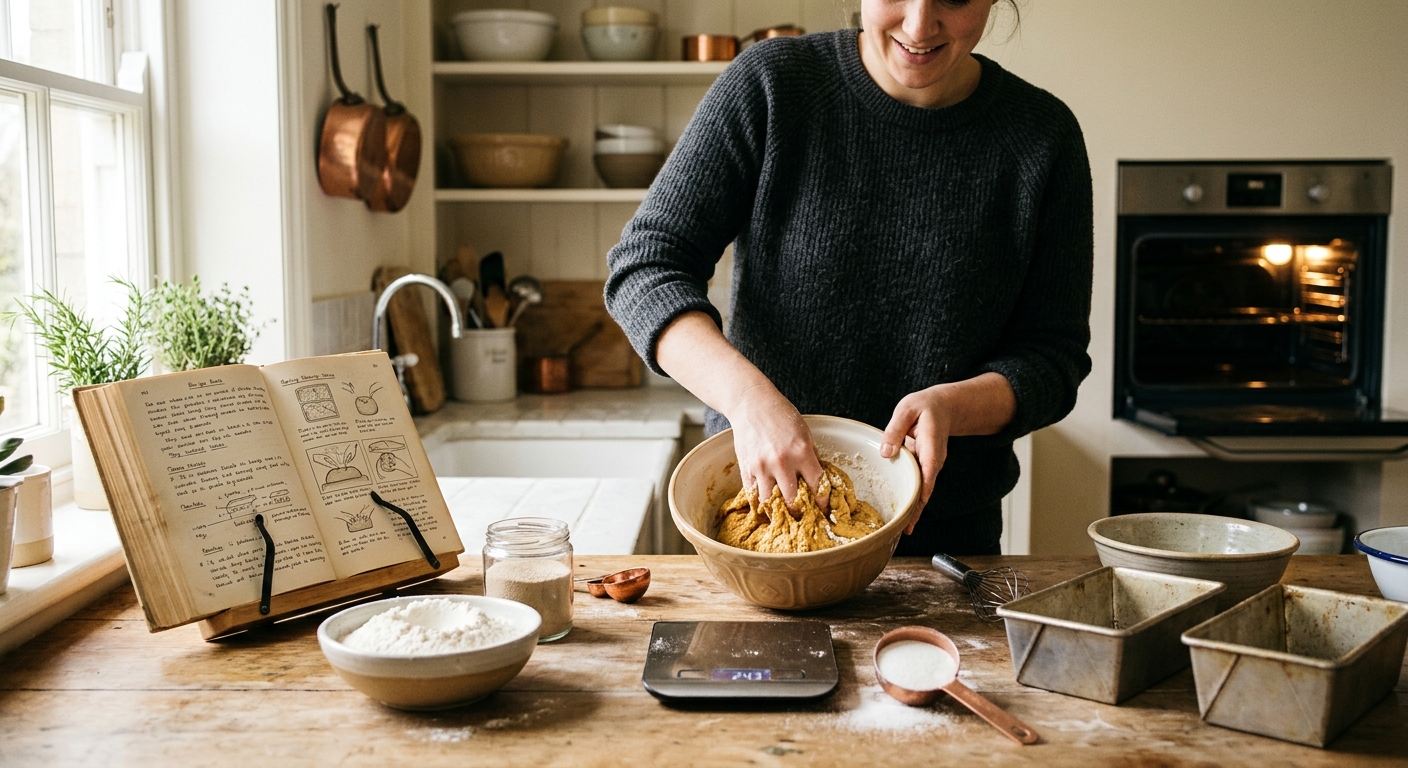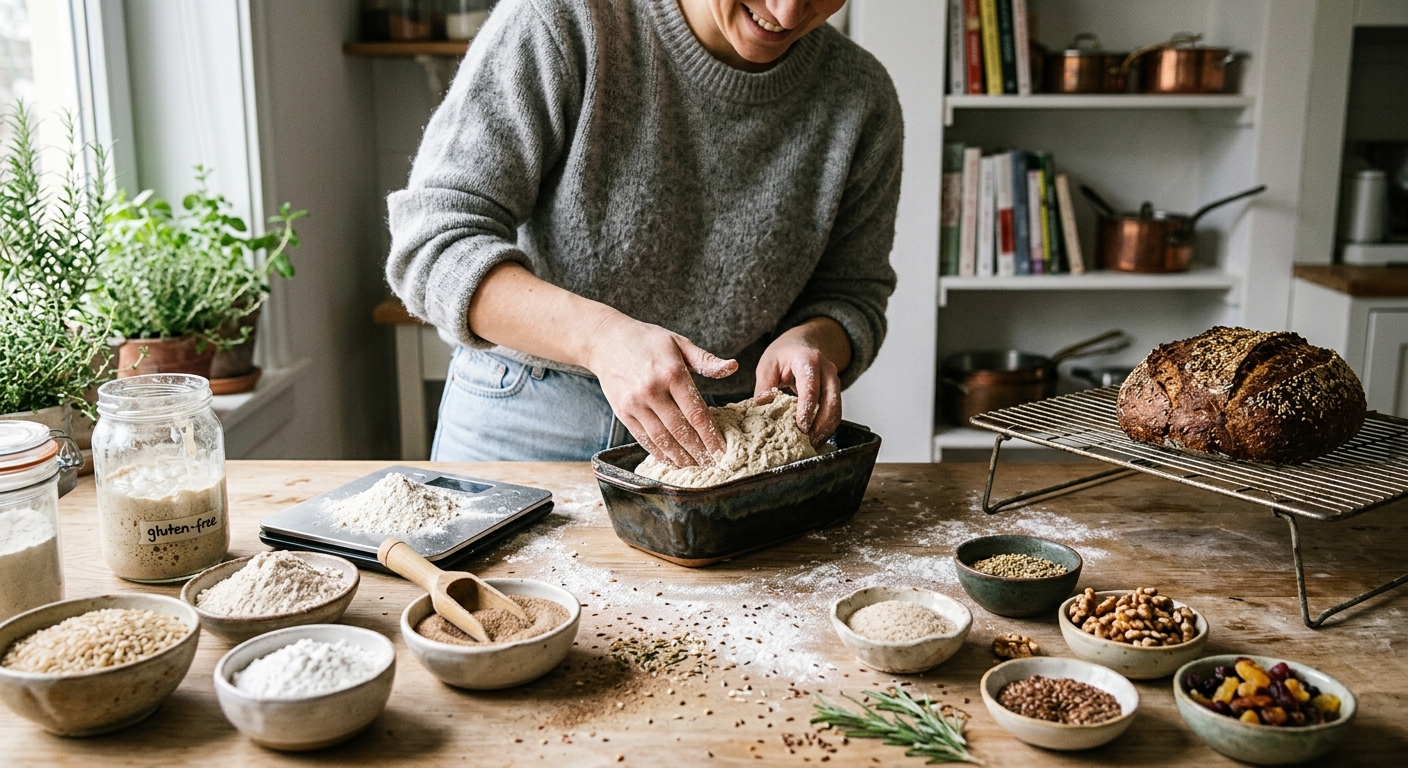
Entering the vibrant world of flour alternatives unlocks an incredible kitchen adventure! Baking without traditional wheat gluten is no longer about settling for dry, crumbly loaves or dense, gummy cakes. Modern food science, combined with traditional culinary craft, lets us create light, airy, flavor-rich baked goods that rivals classic pastry arts.
Transitioning away from conventional wheat requires learning a whole new kitchen language. Gluten acts as a stretchy, elastic binder in traditional doughs, trapping gas bubbles released by yeast or chemical leaveners. Recreating that structural lattice using alternative flours demands an understanding of hydrocolloids, precise starches, and strategic moisture retention. With the right foundation, your home kitchen will quickly become a haven of irresistible gluten-free creations!
1. The Chemistry of Elasticity: How Flour Works
To excel at gluten-free pastry and bread creation, we first look at what happens inside dough when traditional wheat is missing.
+-------------------+------------------------------------+----------------------------------+
| Flour Component   | Role in Traditional Baking         | Gluten-Free Replacement          |
+-------------------+------------------------------------+----------------------------------+
| Glutenin          | Provides elasticity & structure    | Xanthan Gum / Psyllium Husk      |
| Gliadin           | Imparts viscosity & extensibility   | Pre-gelatinized Starches         |
| Wheat Starch      | Absorbs water & sets structure     | Tapioca / Potato / Corn Starch   |
+-------------------+------------------------------------+----------------------------------+
Wheat contains two primary structural proteins: glutenin, which gives dough strength and springy elasticity, and gliadin, which provides fluid stretchiness. When mixed with water, these proteins form a continuous, stretchy web that traps air pockets as heat expands them.
In gluten-free baking, we reconstruct this network using a custom blend of alternative grains, root starches, and natural hydrocolloid binders. Instead of relying on a single flour, we layer different botanical elements to balance flavor, starch absorption, and structural stability.
The Anatomy of a Perfect Flour Blend
Creating a balanced homemade blend involves combining distinct flour groups in calculated ratios:
-
Protein Base ($40\%$$\text{–}$$50\%$): Whole-grain flours like brown rice, sorghum, oat, or millet provide grounding structure, deep flavor, and essential nutrition.
-
Neutral Starch ($30\%$$\text{–}$$40\%$): Refined starches like tapioca, potato starch, or sweet rice flour add lightness, soften the crumb, and improve expansion.
-
Moisture Binders ($5\%$$\text{–}$$10\%$): High-protein, high-fat additions like almond meal or coconut flour help hold onto moisture, preventing premature staling.
2. Your Comprehensive Beginner Baking Guide
Stepping into gluten-free baking becomes easy and exciting when you establish clear workflow rules. Mastering fundamental tools and environment controls guarantees consistent success every time you bake.
           +---------------------------------------+
           |       1. Precision Digital Scale      |
           +---------------------------------------+
                               |
                               v
           +---------------------------------------+
           |       2. Custom Flour Blending        |
           +---------------------------------------+
                               |
                               v
           +---------------------------------------+
           |      3. Hydrocolloid Activation       |
           +---------------------------------------+
                               |
                               v
           +---------------------------------------+
           |    4. Extended Hydration Resting      |
           +---------------------------------------+
Essential Kitchen Tools for Success
-
Digital Gram Scale: Measuring by volume using measuring cups leads to inconsistent results because alternative flours vary wildly in density. Weighing ingredients in grams removes guesswork.
-
High-Powered Silicone Spatulas: Gluten-free batters are often wetter and stickier than wheat doughs. Flexible spatulas make handling high-hydration batters effortless.
-
Heavy-Gauge Anodized Aluminum Pans: Superior heat conduction prevents cold spots, ensuring dough bakes through evenly before the outer edges burn.
-
Hanging Oven Thermometer: Built-in oven displays are notoriously inaccurate. A internal thermometer verifies exact temperatures, protecting delicate bakes from sudden collapses.
Pro Tip: Always let gluten-free batter rest at room temperature for 20 to 30 minutes before baking. This gives coarse grain particles time to fully absorb liquids, eliminating any gritty texture in your finished bake.
3. Essential Binders: Hydrocolloids and Gelatinization
Without natural gluten strands, batters need extra help to hold expanding gases during baking. That is where natural hydrocolloids come into play!
Xanthan Gum vs. Psyllium Husk
Both of these binders absorb liquid and build structural stability, but they serve different baking goals:
-
Xanthan Gum: A plant-based polysaccharide produced via bacterial fermentation. It excels in cakes, quick breads, and delicate cookies where it creates a tender, velvety crumb.
-
Psyllium Husk: Derived from Plantago ovata seeds, psyllium is rich in soluble fiber. It creates a stretchy, gel-like structure ideal for yeast-risen breads, artisan rolls, and pizzas that require shaping and hand-folding.
+-------------------+------------------------------------+----------------------------------+
| Binder Type       | Best Application                   | Usage Ratio (per 100g flour)     |
+-------------------+------------------------------------+----------------------------------+
| Xanthan Gum       | Cakes, Muffins, Soft Cookies       | 1.0g - 1.5g                      |
| Whole Psyllium    | Artisan Breads, Pizza Crusts, Brioche | 4.0g - 6.0g                   |
| Guar Gum          | Frozen Pastries, Cold Desserts     | 1.0g - 2.0g                      |
+-------------------+------------------------------------+----------------------------------+
4. Troubleshooting: How to Prevent Cake from Sinking
Few things are as frustrating as watching a gorgeous cake rise in the oven, only to see its center collapse as it cools. Gluten-free cakes are especially prone to sinking because their starch matrices take longer to set firmly under heat.
Top Causes of Center Collapse and How to Fix Them
-
Excessive Leavening Agents: Adding too much baking powder creates oversized air bubbles that burst under their own weight before the batter sets. Reduce leavening agents by about $15\%$ compared to traditional wheat recipes.
-
Trapped Internal Steam: Gluten-free batters contain higher hydration levels. If you remove a cake from the oven before its interior fully sets, trapped moisture condenses quickly, pulling the center downward.
-
Premature Oven Door Opening: Opening the oven door during the first two-thirds of the bake introduces cold air currents that drop internal oven pressure, collapsing delicate starch structures.
-
Over-Creaming Fat and Sugar: Beating butter and sugar too vigorously incorporates fragile air pockets that cannot support the weight of heavy alternative flours. Cream just until smooth and pale.
5. Game-Changing Baking Hacks for High-Hydration Batters
Unlocking professional-quality textures requires clever kitchen techniques tailored to gluten-free ingredients. Try these practical, high-impact strategies:
1. Thermal Pre-Gelatinization (Scalding)
Adding hot or boiling water to a portion of your starches before mixing gelatinizes the granules. This allows the dough to hold significantly more liquid without becoming runny, producing soft, flexible sandwich bread that won’t crumble when sliced.
2. High-Protein Dairy Enhancements
Incorporating sour cream, full-fat Greek yogurt, or buttermilk adds natural lactic acid and protein. The acid softens starches, while extra protein reinforces structural walls, yielding rich, moist cakes with a velvety bite.
3. Apple Cider Vinegar Activation
A tiny dash of apple cider vinegar (around 1 teaspoon per loaf) lowers dough pH. This slight acidity strengthens protein bonds and activates baking soda, delivering a dramatic volume boost to loaf breads.
6. Wild Fermentation: Essential Sourdough Starter Tips
Creating a vibrant, active wild yeast culture using gluten-free flours is remarkably rewarding! Without wheat, wild yeast and beneficial lactic acid bacteria thrive in nutrient-dense grain cultures like whole brown rice, teff, or sorghum flours.
+-------------------+------------------------------------+----------------------------------+
| Starter Phase     | Primary Goal                       | Optimal Temperature Range        |
+-------------------+------------------------------------+----------------------------------+
| Initial Inoculation | Establish natural microflora      | 75°F - 80°F (24°C - 27°C)        |
| Daily Refreshments | Build microbial density & acidity  | 72°F - 78°F (22°C - 25°C)        |
| Peak Activity     | Capture maximum yeast gas release  | Use within 2-4 hours of peak     |
+-------------------+------------------------------------+----------------------------------+
Feeding and Maintaining Your Culture
-
Use Whole-Grain Flours: Unrefined brown rice, teff, or buckwheat flours carry natural wild microbes on their outer husks, speeding up culture activity compared to white rice flours.
-
Maintain 1:1 Hydration by Weight: Mix equal parts flour and unchlorinated water by weight. Tap water treated with chlorine can inhibit delicate yeast growth.
-
Track Peak Expansion: Gluten-free sourdough starters rarely double in volume like wheat starters because they lack stretchy gluten to trap gas long-term. Look for small surface bubbles and a bright, pleasantly fruity-sour aroma to tell when it’s ready.
7. Master Checklist for Gluten-Free Success
-
[ ] Measure every dry and wet ingredient using a digital gram scale.
-
[ ] Allow mixed batters to rest for 20 to 30 minutes before baking to let the flour fully hydrate.
-
[ ] Verify internal cake temperatures with an instant-read probe thermometer (target $205^\circ\text{F}\text{–}210^\circ\text{F}$ for breads).
-
[ ] Cool baked goods on elevated wire racks to prevent condensation from creating a soggy bottom.
-
[ ] Store finished items in airtight containers with parchment paper between slices to lock in freshness.
With these proven techniques, smart ingredient choices, and a spirit of joyful kitchen discovery, you are fully equipped to master alternative-flour baking. Get ready to enjoy tender cakes, crusty sourdough loaves, and delicious pastries that everyone at your table will love!