The domestic hearth has undergone a quiet revolution over the past few decades. No longer relegated to utility closets or hidden behind pantry doors, culinary tools have emerged as symbols of artisanal craft, aesthetic expression, and mechanical precision. At the epicenter of this renaissance sits high quality cookware—the primary interface through which heat, ingredient, and technique coalesce into a memorable meal.
Yet, entering today’s cookware landscape can feel disorienting. Endless arrays of glowing metals, proprietary synthetic coatings, bold marketing claims, and disparate price structures flood digital marketplaces and specialized kitchen boutiques alike. Selecting the ideal culinary vessels requires piercing through glossy advertisement hyperbole and examining the fundamental physics of heat transfer, structural metallurgy, and manufacturing ergonomics.
Whether your ambition is searing a dry-aged ribeye with a dark caramelized crust, gently coddling an emulsion sauce, or slow-simmering an aromatic stock across a winter afternoon, your choice of pots and pans directly dictates how thermal energy radiates into your ingredients. This comprehensive guide dissects the architectural nuances of professional-grade tools, evaluates essential material properties, and profiles the top manufacturers engineering the best kitchen pans, best cooking pots, and best cooking pans available today.
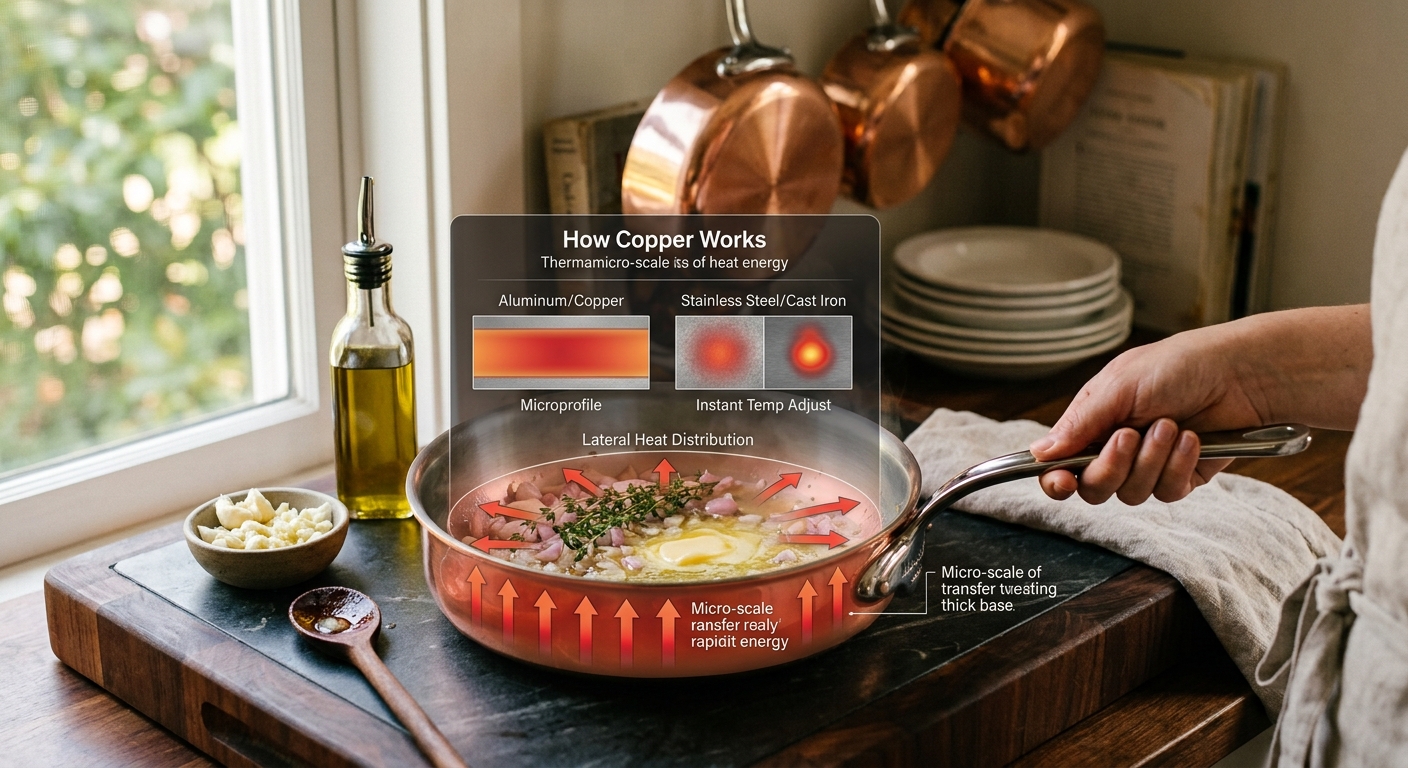
Thermodynamics in the Kitchen: How Cookware Actually Works
Before assessing specific brands, one must understand the metallurgical physics that govern pan performance. Every vessel acts as a thermal modifier. Metals do not heat uniformly by default; rather, each elemental element exhibits distinct traits regarding thermal conductivity, heat retention, mass, reactivity, and structural longevity.
                     [ Thermal Performance Spectrum ]

Conductivity (Fast Heat Response)  ◄──────────────────►  Retention (Stable Heat Storage)
   [Copper]    →    [Aluminum]    →    [Stainless Steel]    →    [Cast Iron]
 (Instant shift)   (Fast & light)    (Durable & neutral)     (Heavy thermal mass)
1. Thermal Conductivity versus Thermal Capacity
Conductivity defines how swiftly a metal absorbs heat energy from a burner and distributes it laterally across its cooking surface. Copper and aluminum represent the gold standard in conductivity; they heat almost instantly and eradicate localized scorching spots. However, high conductivity metals often lack volumetric heat storage.
Conversely, thermal capacity (retention) describes how much heat energy a metal can store within its molecular structure. Dense materials like cast iron exhibit poor conductivity, heating sluggishly and unevenly at first. Yet, once thoroughly saturated with thermal energy, they radiate intense heat consistently and will not drop drastically in temperature when cold food items hit the surface.
2. Cladding Mechanics: Bonding Dissimilar Metals
Because no single elemental metal offers ideal conductivity, maximum durability, and total chemical inertness simultaneously, advanced manufacturers utilize clad construction. Cladding permanently bonds layers of contrasting metals under immense pressure.
-
Tri-Ply (3-Layer): Encapsulates a core of conductive aluminum between an interior layer of surgical-grade 18/10 stainless steel and an exterior layer of magnetic stainless steel suited for induction cooktops.
-
5-Ply and Multi-Ply: Integrates alternating layers of structural aluminum, pure aluminum, and occasionally copper cores. These extra layers provide increased volumetric density to dampen heat spikes on high-BTU gas burners or intense induction cooktops.
3. Surface Reactivity
Certain ingredients—specifically acidic liquids like tomatoes, wine reductions, citrus, or vinegar—interact chemically with bare metals. Raw iron and carbon steel absorb acids and leach metallic notes into foods while stripping away protective seasoning layers. Stainless steel, enameled coatings, and vitreous glazes remain chemically inert, safeguarding pristine flavors.
Anatomy of the Master Category: Materials Examined
To select high quality cookware tailored to your routine, examine the individual operational profiles of primary cookware construction materials.
Clad Stainless Steel
Stainless steel remains the uncontested backbone of modern gastronomy. It handles intense thermal shifts, tolerates metal utensils, resists pitting corrosion, and cleans up effortlessly. High-grade stainless steel fosters an ideal environment for forming fond—the caramelized protein remnants that adhere to the pan bottom, serving as the essential foundation for deglazing and creating pan sauces.
+-----------------------------------------------------------------------------------+
|                        CLAD STAINLESS STEEL ANATOMY                               |
+-----------------------------------------------------------------------------------+
| Top Layer:    18/10 Stainless Steel (Hygienic, Non-Reactive Cooking Surface)     |
| Middle Core:  Pure Core Aluminum / Copper (Rapid Lateral Heat Distribution)       |
| Bottom Layer: Magnetic Stainless Steel (Induction Compatible & Protective Shell)  |
+-----------------------------------------------------------------------------------+
Enameled Cast Iron
Combining the raw thermal density of heavy cast iron with an impermeable silica glass coating, enameled iron excels at slow braising, deep-frying, bread baking, and stew preparation. The enamel eliminates the painstaking seasoning process required by bare cast iron while resisting acidic corrosion. Enameled pieces act as long-term heat reservoirs, keeping stews bubbling steadily on low heat.
Blue and Black Carbon Steel
A favored material among professional restaurant lines, carbon steel features properties bridging cast iron and stainless steel. Pressed from thin metal sheets (99% iron, 1% carbon), carbon steel is significantly lighter than cast iron while maintaining exceptional heat retention. When properly seasoned with polymerized oils, it acquires a smooth, dark, natural nonstick surface ideal for stir-frying, searing protein, and frying delicate eggs.
Specialty Nonstick and Ceramics
Nonstick surfaces fulfill a specific niche for low-fat cooking and delicate protein preparation like skin-on fish or crepes. Modern high-end options have evolved beyond delicate early coatings:
-
Advanced PTFE: PFOA-free, multi-layer reinforced PTFE surfaces offer slick food release and improved scratch resistance under low-to-medium heat settings.
-
Sol-Gel Ceramic: Derived from natural silica minerals, ceramic nonstick finishes avoid synthetic fluoropolymers while resisting moderate thermal wear, though their slick release capability naturally fades faster than classic PTFE over years of daily thermal cycling.
-
Hybrid Surfaces: Hexagonal laser-etched stainless steel grids rising above nonstick valleys allow high-heat searing while preserving easy food release.
Profiles in Culinary Excellence: Top Rated Brands
A select group of elite cookware manufacturers continuously shape the standards of home and commercial kitchens alike. Evaluating these heritage and contemporary brands highlights where engineering meets everyday practicality.
+-----------------------------------------------------------------------------------------+
|                               LEGACY BRAND COMPARISON                                   |
+-------------------+----------------------------+----------------------------------------+
| BRAND             | FLAGSHIP MATERIAL          | DISTINGUISHING CHARACTERISTIC          |
+-------------------+----------------------------+----------------------------------------+
| All-Clad          | Multi-Ply Clad Stainless   | USA-manufactured benchmark cladding    |
| Demeyere          | 7-Ply Clad & Silvinox      | Rivetless interiors & high induction   |
| Le Creuset        | Enameled Cast Iron         | Light interior glaze & vivid colors    |
| Staub             | Enameled Cast Iron         | Black matte enamel & self-basting lids |
| Mauviel 1830      | Copper & Stainless Lining  | French copper craftsmanship            |
+-------------------+----------------------------+----------------------------------------+
1. All-Clad Metalcrafters
Founded in Canonsburg, Pennsylvania, All-Clad invented the process of metal bonding for kitchenware. Their D3 Tri-Ply and D5 5-Ply collections represent the gold standard against which all clad stainless steel is measured. Featuring thick aluminum cores extending up the sidewalls, riveted handles, and durable steel construction, All-Clad pieces easily last a lifetime.
2. Demeyere
Belgium’s Demeyere represents the high-water mark for high-tech engineered stainless steel. Their flagship Atlantis 7-Ply collection uses tailored construction depending on the vessel’s culinary function: fry pans feature full wall cladding, while saucepots utilize thick, copper-disc bases for rapid boiling control. Furthermore, Demeyere treats steel with a proprietary Silvinox electrochemical polish that removes surface impurities, leaving a silvery, fingerprint-resistant shine that lasts for decades. Crucially, their interiors are completely rivetless, eliminating tiny crevices where food debris typically collects.
3. Le Creuset & Staub
These rival French foundries produce the world’s most sought-after enameled cast iron vessels.
-
Le Creuset: Renowned for vibrant exterior enamel coatings and smooth, light-colored sand interiors that make monitoring butter browning and fond development effortless.
-
Staub: Favors a textured black-matte enamel interior that enhances browning and searing while resisting dark stains. Staub lids feature small interior spikes that collect rising steam and drip condensation back onto cooking ingredients, creating a self-basting environment.
4. Made In Cookware
Disrupting legacy supply chains, Made In manufactures professional-grade stainless steel, carbon steel, and copper pieces in partnership with historic foundries in France and the United States. Their 5-ply stainless steel pans deliver exceptional heat balance, ergonomic handle contours, and durability at accessible price points.
Building the Ideal Kitchen Set: The Essential Four
Many consumers purchase pre-packaged 12-piece or 15-piece cookware sets, only to discover half the vessels remain unused in deep cabinets. Curating an à la carte collection of the best kitchen pans and best cooking pots tailored to specific techniques often proves far more functional.
               [ The Essential Modular Cookware Suite ]

  10-Inch Clad Stainless Skillet   ──► High-heat searing, sautéing, pan sauces
  12-Inch Carbon Steel / Cast Iron ──► Searing steaks, frying eggs, baking cornbread
  3-Quart Clad Stainless Saucer    ──► Grains, reductions, soups, emulsions
  5.5-Quart Enameled Dutch Oven    ──► Braises, stews, deep-frying, artisan breads
Vessel 1: The Workhorse Stainless Steel Skillet (10 or 12 Inch)
This is arguably the most versatile pan in existence. A fully clad 10-inch or 12-inch stainless skillet handles high-temperature searing, sautéing aromatics, roasting vegetables in the oven, and producing silky pan sauces. Look for flared rims that facilitate easy pan-flipping and clean, drip-free pouring.
Vessel 2: The Enameled Cast Iron Dutch Oven (5 to 6 Quart)
If forced to prepare an entire multi-course dinner using a single pot, the Dutch oven is the ideal pick. Its thick cast-iron walls absorb and hold vast amounts of heat, stabilizing temperatures during long braises, deep frying, slow simmering stews, or baking crusty sourdough loaves.
Vessel 3: The Clad Stainless Steel Saucepan (3 Quart)
A well-proportioned 3-quart saucepan with a fitted lid handles grains, rice, blanched vegetables, custards, and soups easily. Clad sidewalls are essential here; cheap single-ply saucepans with thin bases routinely scorch milk, rice, and tomato sauces along the lower corners.
Vessel 4: The Seasoned Carbon Steel or Cast Iron Skillet
Complementing your stainless skillet, a pre-seasoned carbon steel pan or raw cast iron skillet delivers superior nonstick release for delicate foods like eggs, pancakes, or fish, while remaining durable enough for blazing-hot oven roasts and outdoor grilling.
Evaluating Performance: A Step-by-Step Selection Process
When selecting individual pieces or choosing among the best cooking pots and best cooking pans, follow this systematic evaluation process:
Long-Term Maintenance: Preserving Your Investment
Acquiring high quality cookware is only the first step; maintaining its structural integrity ensures it performs reliably for decades.
1. Avoiding Thermal Shock
Never plunge a hot pan directly into a sink filled with cold water. Microscopic metal structures expand when heated; plunging hot pans into cold water causes thermal shock, warping bases, loosening clad layers, and crazing vitreous enamel glazes.
2. Temperature Management
High heat setting is rarely necessary for fully clad or copper-core cookware. Allow pans to preheat gradually over low-to-medium settings. Excessive, unmonitored heat polymerizes oils into stubborn, burnt-on dark residues and degrades synthetic nonstick surfaces.
3. Restoring Stainless Steel Polish
To clear rainbow heat tint, mineral deposits, or stubborn scorched remnants from stainless surfaces, use oxalic-acid-based cleaners like Bar Keepers Friend alongside a soft sponge. Avoid bleach or harsh steel scrubbers, which cause microscopic scratching and dull metal finishes.
Final Thoughts: Investing in Culinary Precision
Selecting kitchen tools is a personal process balancing daily habits, budget, and culinary aspirations. Rather than buying vast, low-quality cookware sets, invest in fewer, higher-quality pieces engineered from proven materials like multi-ply clad stainless steel, enameled cast iron, and seasoned carbon steel.
By understanding material physics, selecting trusted manufacturers, and practicing proper maintenance, you equip your kitchen with reliable instruments that turn daily meal preparation into a rewarding culinary experience.