Modern living introduces an unrelenting cadence of daily micro-stressors. From endless inbox notifications to intense workplace deadlines, our nervous systems are frequently locked in a state of subtle, perpetual hyper-vigilance. Historically, winding down at the end of a grueling afternoon meant reaching for a traditional cocktail. However, a profound paradigm shift is sweeping through global beverage culture. Today, wellness-conscious individuals are swapping alcohol-heavy spirits for botanical elixirs that nourish the body, balance mood, and promote genuine cellular relaxation.
Enter the era of functional mixology—the art and science of crafting sophisticated beverages infused with adaptogens, nootropics, and therapeutic herbs. These elevated concotions go far beyond basic fruit juices or sparkling waters; they are designed with intention.
The Evolution of Mindful Drinking
For decades, non-alcoholic options in social environments were treated as an afterthought. Options were often limited to overly sugary sodas, artificial syrups, or plain sparkling water with a lonely lime wedge. The contemporary sober-curious movement has completely dismantled this outdated archetype. Connoisseurs now demand complex flavor profiles, aromatic depth, and tangible wellness benefits without the inevitable cognitive brain fog, disrupted sleep architecture, or inflammatory consequences of alcohol consumption.
Creating a true mocktail without alcohol no longer implies compromising on ceremony, taste, or aesthetic presentation. Functional mocktails act as active wellness tools. By leveraging nature’s pharmacy, these drinks help restore equilibrium to the hypothalamic-pituitary-adrenal (HPA) axis, easing tension while keeping the mind sharp and pristine.
Key Functional Ingredients for Stress Relief
To construct a beverage that actively soothing stress, it is essential to understand the functional ingredients driving this botanical revolution:
-
Adaptogens: Plant roots and fungi that assist the body in resisting physical, chemical, and biological stressors. Top picks include ashwagandha, reishi mushroom, holy basil (tulsi), and rhodiola rosea.
-
Nootropics & Amino Acids: Compounds like L-theanine (found in green tea) and GABA that foster calm, focused mental states by modulating neurotransmitter activity.
-
Botanicals & Flowers: Delicately dried buds and petals used to create fragrant floral infusions that deliver bioflavonoids and soothing aromatics.
-
Magnesium & Electrolytes: Essential minerals that support muscular relaxation and cellular hydration.
Mastering Home Functional Mixology
Crafting stress-relieving drinks at home requires balancing flavor profiles—sweet, sour, bitter, and astringent—while preserving the therapeutic integrity of your active botanicals.
Essential Techniques
-
Infusions & Decoctions: Gentle simmering extracts water-soluble active compounds from roots and herbs without scorching delicate phytochemicals.
-
Aeration & Chilling: Preparing shaken mocktails in a traditional metal shaker incorporates micro-bubbles, creating a velvety mouthfeel that mimics high-end artisanal cocktails.
-
Color Psychology: Visual appeal directly influences the neurochemical anticipation of enjoyment. Incorporating chlorophyll-rich ingredients, spirulina, or matcha yields vibrant green colored drinks non-alcoholic lovers will adore, offering a visual cue of freshness and vitality.
4 Signature Functional Mocktail Recipes
1. Ashwagandha Golden Twilight Elixir
This soothing evening beverage pairs warm, earthy root notes with gentle citrus to quiet a racing mind before sleep.
-
1.5 cups warm oat milk or coconut water
-
½ tsp ashwagandha root powder
-
¼ tsp ground turmeric
-
1 tbsp raw honey or agave nectar
-
1 pinch black pepper (enhances bioavailability)
Combine all ingredients in a small saucepan. Heat gently for 5 minutes without boiling, whisking briskly until frothy. Pour into a ceramic mug and sip slowly.
Incorporating non alcoholic drinks with ashwagandha into your nightly wind-down ritual signals to your body that it is safe to transition into a parasympathetic state.
2. Chamomile Lavender Cloud
-
4 oz brewed and chilled chamomile tea
-
1 oz fresh lemon juice
-
½ oz organic lavender syrup
-
2 oz sparkling water
-
Dried lavender sprigs for garnish
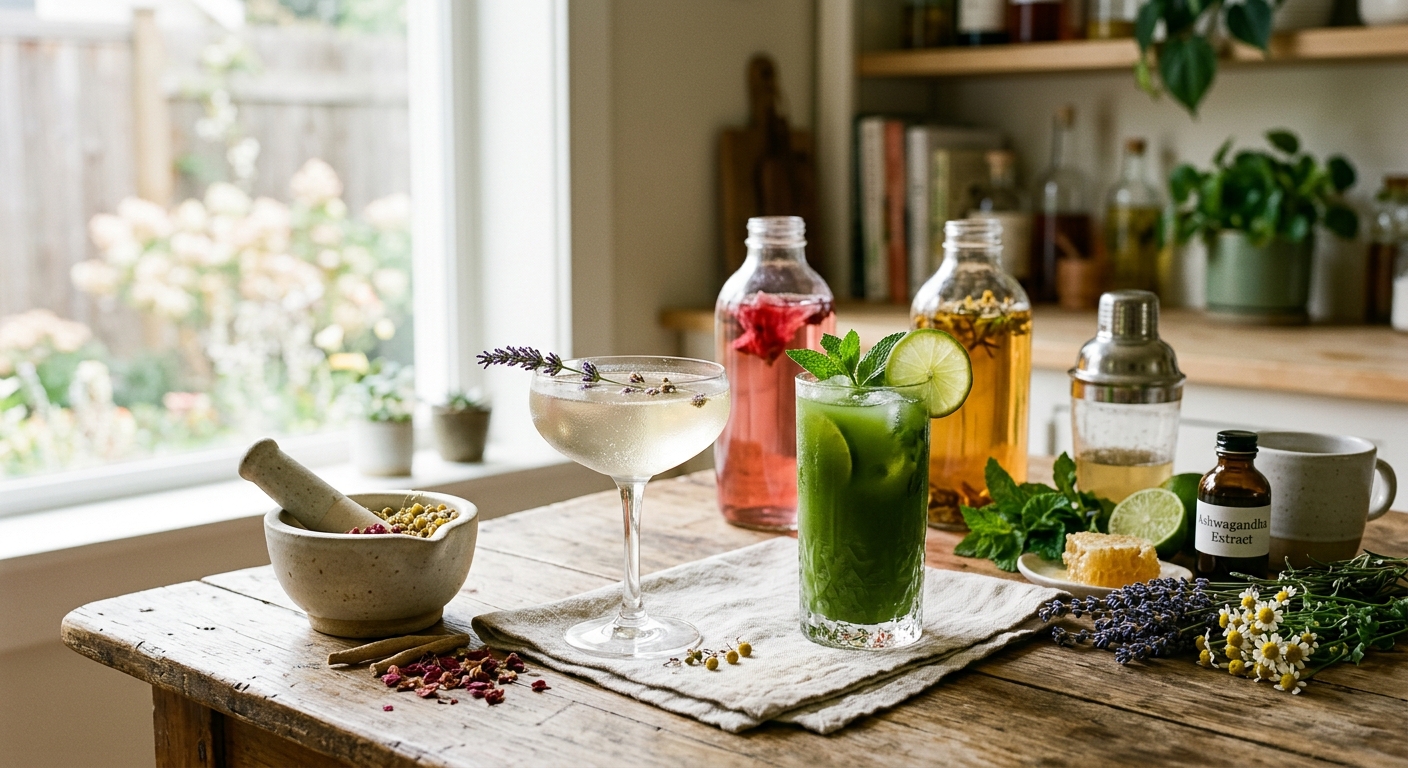
Add the chilled chamomile tea, lemon juice, and lavender syrup to a cocktail shaker filled with ice. Shake vigorously for 15 seconds. Strain into a chilled coupe glass, top with sparkling water, and garnish with lavender.
3. Matcha Mint Zen Chiller
-
1 tsp ceremonial grade matcha powder
-
4 oz chilled coconut water
-
1 oz fresh lime juice
-
6 fresh mint leaves
-
½ oz simple syrup
Muddle the fresh mint leaves in the bottom of a shaker. Add matcha powder, coconut water, lime juice, simple syrup, and ice. Shake forcefully to emulsify the matcha. Strain over fresh ice into a tall glass.
4. Rosehip & Hibiscus Glow
-
3 oz concentrated hibiscus tea
-
1 oz tart cherry juice
-
½ oz rose water
-
Sparkling tonic water to top
Combine hibiscus tea, tart cherry juice, and rose water in a glass filled with ice. Stir gently and finish with a splash of sparkling tonic for an effervescent, floral finish.
Comparative Guide to Functional Ingredients
| Ingredient | Primary Function | Flavor Profile | Best Time to Consume |
| Ashwagandha | Lowers cortisol, reduces anxiety | Earthy, slightly bitter | Late afternoon / Evening |
| L-Theanine | Promotes calm focus | Savory, umami, mild | Morning / Early afternoon |
| Holy Basil (Tulsi) | Adaptogenic, supports mood | Herbal, peppery, sweet | Any time of day |
| Magnesium Powder | Relaxes muscles, aids sleep | Varies (citrus, berry) | 30–60 mins before bed |
| Chamomile | Mild sedative, digestive aid | Floral, apple-like, gentle | Evening |
Final Thoughts on Mindful Mixology
Transforming your kitchen into a functional beverage lab is one of the most rewarding self-care habits you can cultivate. By swapping intoxicating spirits for intentional, herb-infused elixirs, you gain all the celebratory fun and sensory pleasure of a evening drink—without compromising your energy, mental clarity, or long-term wellness.