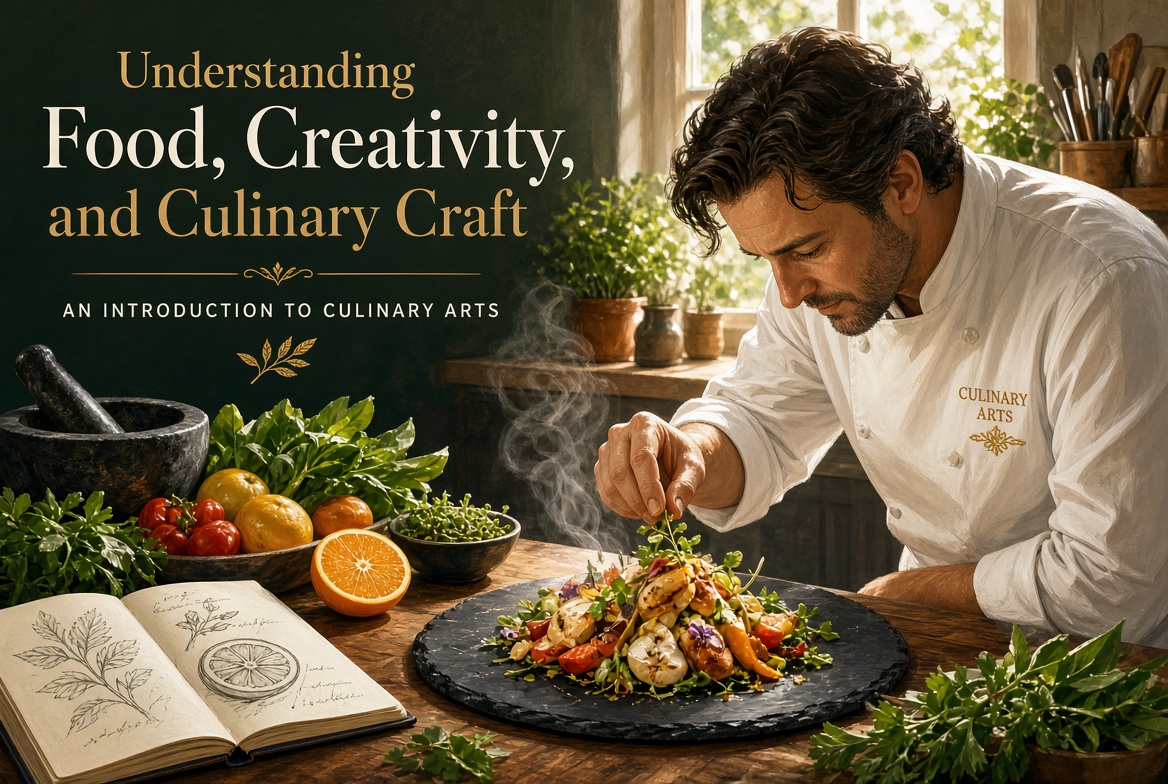
Food is one of the most universal forms of human expression. It nourishes the body, gathers people around a table, preserves cultural traditions, and provides an outlet for creativity. Behind every thoughtfully prepared dish is a combination of ingredients, techniques, knowledge, timing, and craftsmanship.
This is the essence of culinary arts.
But culinary arts extends far beyond simply knowing how to cook. It encompasses food preparation, kitchen management, hospitality, menu development, nutrition, presentation, sanitation, cultural traditions, and the business principles that allow food operations to function successfully.
For anyone considering a career in hospitality or simply curious about professional cooking, understanding the description of culinary arts provides a useful starting point. The subject is broad, dynamic, and remarkably multifaceted.
From a bustling restaurant kitchen to a luxury hotel, bakery, catering company, cruise ship, private residence, or food production facility, culinary professionals can work in an extraordinary range of environments.
This guide explores the meaning of culinary arts, the skills involved, career opportunities, education, workplace responsibilities, and what it takes to thrive in the modern culinary arts field.
What Does Culinary Mean?
The simplest way to understand what does culinary mean is to connect the word with food and cooking.
The term “culinary” relates to cooking, food preparation, and the kitchen. It originates from the Latin word culinarius, associated with the kitchen or cooking.
Yet the modern meaning is considerably broader.
Culinary work involves transforming raw ingredients into food that is safe, appealing, flavorful, and suitable for a particular purpose. It can involve everything from preparing a simple breakfast to designing an elaborate tasting menu.
Culinary professionals may work with:
- Vegetables and fruits
- Meat and poultry
- Fish and seafood
- Grains and legumes
- Dairy products
- Herbs and spices
- Chocolate and confectionery
- Bread and pastry
- Fermented foods
- Specialty ingredients
- Beverages and accompaniments
The discipline also involves understanding how ingredients behave under different conditions.
Heat changes texture. Acidity alters flavor. Fermentation develops complexity. Emulsification creates sauces with distinctive consistency. Caramelization contributes sweetness and color.
In other words, culinary arts combines practical craftsmanship with a degree of food science.
What Is the Description of Culinary Arts?
A useful description of culinary arts is the study and practice of preparing, cooking, presenting, and managing food using professional techniques and principles.
It incorporates both creative and technical abilities.
A chef needs imagination to develop dishes, but creativity alone is not enough. The food must also be consistent, safe, economical, and appropriate for the intended diners.
Culinary arts can therefore be viewed through several interconnected dimensions.
Food Preparation
Professionals learn how to select, clean, trim, cut, portion, and prepare ingredients.
Cooking Techniques
These include methods such as roasting, grilling, baking, braising, sautéing, steaming, poaching, frying, and sous vide cooking.
Flavor Development
Culinary professionals study seasoning, sauces, herbs, spices, textures, aroma, and the interaction between ingredients.
Food Presentation
Plating involves arranging food in a visually appealing and functional manner.
Food Safety
Temperature control, sanitation, storage, cross-contamination prevention, and personal hygiene are fundamental.
Kitchen Management
Professional kitchens require scheduling, inventory management, purchasing, organization, cost control, and communication.
Hospitality
Food is ultimately prepared for people. Understanding guest expectations and service standards is therefore an important part of the profession.
This combination makes culinary arts much more than a collection of recipes.
The Culinary Arts Field
The culinary arts field encompasses a wide range of occupations and specializations.
A common misconception is that everyone who studies culinary arts eventually becomes a restaurant chef. In reality, professional food careers are considerably more diverse.
Possible areas include:
- Restaurants
- Hotels and resorts
- Bakeries
- Pastry shops
- Catering companies
- Cruise ships
- Private households
- Hospitals
- Schools and universities
- Food manufacturing
- Corporate dining
- Event venues
- Food media
- Recipe development
- Culinary education
- Food styling
- Product development
This diversity makes culinary education useful for people with different interests.
Someone who enjoys precision might gravitate toward pastry. A person fascinated by management may pursue food and beverage operations. Another individual may prefer menu development, catering, or culinary instruction.
There is no single route through the industry.
Major Areas of Culinary Arts
Culinary arts contains numerous specializations, each with its own techniques and professional vocabulary.
Culinary Cooking
General culinary cooking covers savory food preparation and is often associated with restaurant and hotel kitchens.
Professionals may prepare appetizers, soups, sauces, salads, meat, seafood, vegetables, grains, and complete entrées.
The work demands versatility.
A cook might prepare a delicate sauce in one moment and manage several sauté pans during a busy service minutes later.
Pastry and Baking
Pastry is a highly precise branch of culinary arts.
Unlike some savory cooking, where ingredients can sometimes be adjusted intuitively, baking often depends on carefully controlled ratios, temperatures, hydration, fermentation, and timing.
Pastry professionals may specialize in:
- Cakes
- Bread
- Viennoiserie
- Cookies
- Tarts
- Pies
- Chocolate
- Confections
- Custards
- Frozen desserts
Patience and precision are particularly valuable in this specialization.
Garde Manger
Garde manger traditionally refers to the cold-food section of a professional kitchen.
This area can include:
- Salads
- Cold appetizers
- Terrines
- Pâtés
- Charcuterie
- Canapés
- Cold sauces
- Decorative preparations
The work often combines technical precision with elaborate presentation.
Butchery
Butchery focuses on the preparation and portioning of meat and poultry.
A professional butcher needs knowledge of anatomy, knife handling, portion control, storage, food safety, and appropriate cooking methods for different cuts.
Understanding the structure of an ingredient can also help minimize waste.
Culinary Management
Not every culinary professional spends the entire day cooking.
Management positions may involve scheduling employees, ordering supplies, calculating food costs, developing menus, training staff, supervising sanitation, and monitoring service.
These responsibilities become increasingly important as a professional advances.
A successful kitchen is not merely a place where good food is produced. It is an intricate operational system.
Essential Culinary Skills
Anyone entering the culinary profession needs a strong technical foundation.
Knife Skills
Knife work is fundamental.
Professional cooks learn how to dice, julienne, mince, slice, chop, chiffonade, and portion ingredients efficiently.
Good knife technique improves consistency and reduces waste.
It also contributes to safety.
Heat Management
Understanding heat is essential.
A cook needs to recognize when to use gentle heat for a delicate sauce and when high heat is appropriate for searing.
Different cookware materials also respond differently to temperature.
Learning these nuances helps prevent scorching, undercooking, excessive moisture, and poor browning.
Seasoning
Seasoning is more sophisticated than simply adding salt.
Cooks learn to balance:
- Saltiness
- Sweetness
- Acidity
- Bitterness
- Umami
- Heat
- Aromatic intensity
A successful dish often depends on finding equilibrium between these elements.
Sauce Preparation
Sauces can transform relatively simple ingredients.
Classic culinary education may introduce students to foundational sauces and techniques for creating reductions, emulsions, gravies, purées, and contemporary sauces.
A well-made sauce can provide moisture, richness, acidity, aroma, and visual cohesion.
Food Presentation
Presentation matters because diners experience food visually before tasting it.
Plating involves composition, proportion, color, texture, height, and negative space.
Good presentation should enhance the food rather than distract from it.
What Does a Professional Kitchen Look Like?
A commercial kitchen is typically divided into stations or sections.
The exact arrangement varies, but common areas can include:
- Hot line
- Grill
- Sauté
- Fry station
- Garde manger
- Pastry
- Prep area
- Dishwashing
- Storage
- Receiving
Each station has a specific purpose.
During busy service, communication becomes crucial. Orders arrive rapidly, several dishes may need to be prepared simultaneously, and timing must be coordinated so that components reach the dining room together.
This environment can be energetic and demanding.
It can also be tremendously rewarding.
Job Description for Culinary Arts
A job description for culinary arts depends heavily on the position.
An entry-level cook and an executive chef may both work in the same kitchen while having dramatically different responsibilities.
A typical culinary job description may include duties such as:
- Preparing ingredients
- Cooking menu items
- Following standardized recipes
- Maintaining food quality
- Monitoring cooking temperatures
- Maintaining sanitation
- Organizing kitchen stations
- Receiving and storing ingredients
- Controlling food waste
- Assisting with menu preparation
- Maintaining kitchen equipment
- Communicating with other kitchen employees
The exact responsibilities depend on seniority and specialization.
Entry-Level Culinary Positions
Many culinary careers begin with foundational roles.
Commis Chef
A commis chef is generally an entry-level kitchen professional who works under more experienced chefs.
Typical responsibilities can include ingredient preparation, basic cooking, station organization, cleaning, and assisting with service.
This position provides an opportunity to develop fundamental skills in a professional environment.
Line Cook
A line cook is responsible for preparing food at a particular station during service.
Depending on the restaurant, the station might focus on grilling, sautéing, frying, or another category of food.
Consistency and speed are essential.
Prep Cook
Prep cooks perform much of the behind-the-scenes preparation required before service.
Tasks may include:
- Washing produce
- Cutting vegetables
- Preparing sauces
- Portioning proteins
- Measuring ingredients
- Preparing garnishes
- Organizing ingredients
Effective preparation can determine whether a kitchen operates smoothly during service.
Mid-Level Culinary Careers
With experience, culinary professionals may assume greater responsibility.
Chef de Partie
A chef de partie, sometimes called a station chef, manages a specific section of a professional kitchen.
Responsibilities may include preparing dishes, supervising junior staff, maintaining standards, and ensuring that the station remains organized.
Sous Chef
The sous chef is commonly the second-in-command in a professional kitchen.
Responsibilities can include:
- Supervising cooks
- Coordinating service
- Training staff
- Monitoring food quality
- Managing inventory
- Assisting with menu development
- Enforcing sanitation standards
- Supporting the head chef
The role requires both culinary ability and leadership.
Executive Chef
An executive chef may oversee an entire culinary operation.
Depending on the establishment, responsibilities can include:
- Menu development
- Hiring and training
- Food costing
- Purchasing
- Supplier relationships
- Kitchen organization
- Quality control
- Budget management
- Staff scheduling
- Culinary direction
The executive chef must understand both cuisine and business.
A brilliant dish is valuable, but a professional kitchen must also operate within its financial and operational constraints.
The Importance of Food Safety
Food safety is one of the most important components of the culinary arts field.
Professional cooks need to understand how microorganisms can contaminate food and how improper handling can create health risks.
Important practices include:
- Washing hands appropriately
- Preventing cross-contamination
- Storing food at suitable temperatures
- Monitoring cooking temperatures
- Cooling food safely
- Rotating inventory
- Cleaning and sanitizing surfaces
- Separating raw and ready-to-eat foods
Food safety is not an optional supplement to culinary skill.
It is part of culinary professionalism.
A beautifully prepared meal that has been handled unsafely is not a successful culinary product.
Culinary Creativity
One of the most appealing aspects of culinary arts is its creative potential.
Chefs can combine ingredients in new ways, reinterpret traditional recipes, experiment with techniques, and develop distinctive menus.
Creativity might involve:
- Exploring unfamiliar ingredients
- Reimagining traditional dishes
- Creating new flavor combinations
- Developing vegetarian or plant-based dishes
- Experimenting with fermentation
- Combining culinary traditions
- Exploring alternative textures
- Designing seasonal menus
However, successful creativity usually rests on knowledge.
Understanding why an ingredient behaves a certain way makes experimentation more purposeful.
Culinary Arts and Culture
Food is inseparable from culture.
Every region has culinary traditions shaped by geography, history, agriculture, religion, trade, migration, and local resources.
Italian pasta traditions, Japanese knife techniques, Mexican maize-based cuisine, Indian spice combinations, French classical sauces, Indonesian sambals, and Middle Eastern mezze all demonstrate how food can carry cultural knowledge across generations.
Studying culinary arts therefore involves more than learning recipes.
It can involve learning the stories behind those recipes.
Understanding culinary heritage can also help professionals approach traditional foods respectfully and thoughtfully.
Modern Culinary Trends
The contemporary culinary arts field continues to evolve.
Several developments have influenced professional kitchens and home cooking alike.
Plant-Based Cuisine
Chefs increasingly explore vegetables, legumes, grains, mushrooms, nuts, and other plant-based ingredients as central components rather than simple side dishes.
Fermentation
Fermentation has become increasingly prominent in modern culinary experimentation.
Kimchi, miso, sourdough, cultured dairy, pickles, and fermented sauces demonstrate how microorganisms can transform flavor and texture.
Sustainability
Food waste reduction has become an important consideration.
Professional kitchens may use vegetable trimmings for stocks, repurpose ingredients across dishes, or design menus around seasonal availability.
Global Fusion
Modern chefs frequently draw inspiration from multiple culinary traditions.
When approached thoughtfully, this can create intriguing combinations while encouraging greater appreciation for different food cultures.
Culinary Education
Formal culinary education can provide structured training in both practical and theoretical areas.
Programs may cover:
- Food preparation
- Classical cooking techniques
- Baking and pastry
- Nutrition
- Food safety
- Kitchen management
- Menu planning
- Hospitality
- Food costing
- Culinary history
Students typically gain experience through practical kitchen sessions as well as classroom learning.
However, education is only one component of professional development.
Experience matters enormously.
The rhythm of a real service, the discipline of preparation, and the pressure of producing consistent dishes for actual customers teach lessons that are difficult to replicate completely in a classroom.
Important Personal Qualities for Culinary Professionals
Technical skills are essential, but personal qualities also matter.
Organization
A disorganized kitchen quickly becomes inefficient.
Successful cooks prepare ingredients in advance, keep workstations orderly, and understand what needs to happen next.
Communication
Kitchen work is collaborative.
Clear communication helps prevent errors and improves service.
Adaptability
Ingredients run out. Equipment fails. Orders change. Customers have special requirements.
Professional cooks need to respond without allowing unexpected problems to derail the entire operation.
Stamina
Kitchen work can involve long periods of standing, repetitive movement, heat, and demanding service periods.
Physical resilience is useful.
Attention to Detail
A small amount of missing seasoning, an overcooked component, or an incorrectly plated dish can affect the final result.
Consistency depends on noticing details.
Career Opportunities Beyond the Restaurant Kitchen
A culinary education can lead to many careers outside traditional restaurants.
Private Chef
Private chefs prepare meals for individual households or clients.
The work can provide greater control over menus and cooking environments while requiring strong interpersonal and organizational skills.
Caterer
Caterers prepare food for weddings, corporate events, celebrations, conferences, and private gatherings.
This career often combines cooking with logistics.
Food Stylist
Food stylists prepare dishes specifically for photography, advertising, packaging, cookbooks, and media.
Visual composition becomes particularly important.
Recipe Developer
Recipe developers create and test recipes for publications, brands, websites, and food companies.
They need both culinary knowledge and strong written communication.
Culinary Instructor
Experienced professionals may teach cooking techniques in culinary schools, community programs, private classes, or educational institutions.
Food Product Developer
Food manufacturers employ culinary professionals to help develop new products, test recipes, improve formulations, and evaluate sensory qualities.
The possibilities extend far beyond the traditional chef’s jacket.
A Typical Job Description for Culinary Arts Professionals
A generalized job description for culinary arts might read as follows:
Position
Culinary Professional / Cook
Primary Responsibilities
- Prepare ingredients according to established standards.
- Cook food using appropriate culinary techniques.
- Maintain consistent portion sizes and presentation.
- Follow food safety and sanitation procedures.
- Organize and maintain the assigned workstation.
- Monitor ingredient quality.
- Minimize food waste.
- Assist with inventory management.
- Communicate effectively with kitchen and service teams.
- Maintain and clean kitchen equipment.
- Support menu preparation and recipe development when required.
Desired Skills
- Basic and advanced cooking techniques
- Knife proficiency
- Food safety knowledge
- Time management
- Organization
- Teamwork
- Communication
- Attention to detail
- Adaptability
- Creativity
The actual responsibilities will vary according to the employer and position.
How to Build a Culinary Career
A culinary career can begin in several ways.
Some people attend culinary school. Others begin as kitchen assistants and learn through practical experience.
A useful progression might involve:
Learn the fundamentals → Gain kitchen experience → Develop a specialty → Take on responsibility → Build leadership skills → Pursue advanced opportunities.
There is no mandatory single sequence.
What matters is continual development.
A cook who learns one new technique every week can accumulate substantial knowledge over several years.
The Business Side of Culinary Arts
Culinary professionals increasingly need commercial awareness.
Restaurants operate on margins. Ingredients cost money. Labor costs money. Equipment requires maintenance. Food waste reduces profitability.
A chef therefore needs to understand concepts such as:
- Food cost percentage
- Portion control
- Inventory rotation
- Purchasing
- Waste reduction
- Menu pricing
- Labor management
For example, an ingredient may be delicious but commercially impractical if its cost is too high or its availability is inconsistent.
Culinary excellence and financial sustainability must coexist.
Culinary Arts as a Lifelong Discipline
Cooking is not a subject that can be completely mastered once and then forgotten.
Ingredients change. Techniques evolve. Equipment develops. Consumer preferences shift.
Even experienced chefs continue experimenting.
This lifelong nature is one of the most compelling aspects of the profession.
There is always another ingredient to discover, another technique to refine, another cuisine to explore, or another interpretation of a familiar dish to consider.
Common Misconceptions About Culinary Careers
“Culinary Arts Only Means Being a Chef”
False.
The field includes pastry, catering, food development, education, food media, private dining, management, and many other careers.
“You Need to Be Naturally Gifted at Cooking”
Natural enthusiasm can help, but professional skill is largely developed through practice, repetition, feedback, and education.
“Creativity Is the Most Important Skill”
Creativity matters, but consistency, sanitation, organization, technique, and teamwork are equally important.
“Restaurant Work Is Just Cooking”
Professional kitchens involve logistics, purchasing, communication, cleaning, scheduling, inventory, costing, and customer expectations.
Cooking is only one part of the operation.
Final Thoughts on the Description of Culinary Arts
A complete description of culinary arts must go far beyond the simple definition of cooking.
Culinary arts is a multidisciplinary field combining craftsmanship, food science, creativity, hospitality, culture, business, and practical discipline. It encompasses everything from knife skills and sauce preparation to menu design, food safety, kitchen management, and culinary entrepreneurship.
Understanding what does culinary mean provides the first step, but the subject becomes much richer when explored through real-world practice.
The culinary arts field offers an unusually broad range of professional possibilities. A person may become a line cook, pastry chef, sous chef, executive chef, caterer, private chef, recipe developer, culinary instructor, food stylist, or product development specialist.
Likewise, a job description for culinary arts can vary dramatically depending on the position. Entry-level cooks may focus primarily on preparation and station support, while senior chefs can oversee staff, budgets, menus, suppliers, food quality, and entire culinary operations.
At its heart, however, culinary arts remains about transformation.
Raw ingredients become meals. Simple techniques become refined dishes. Recipes become traditions. Kitchens become places where knowledge, culture, creativity, and human connection meet.
That is what makes culinary arts such a fascinating and enduring field.