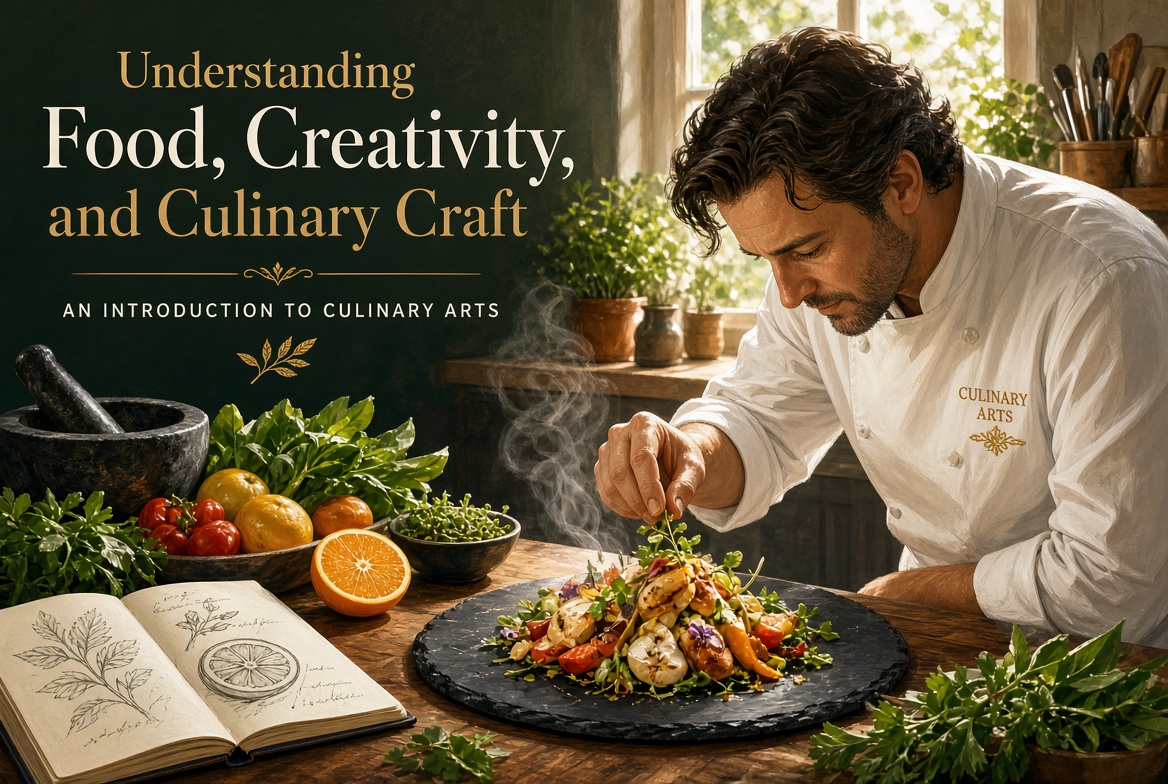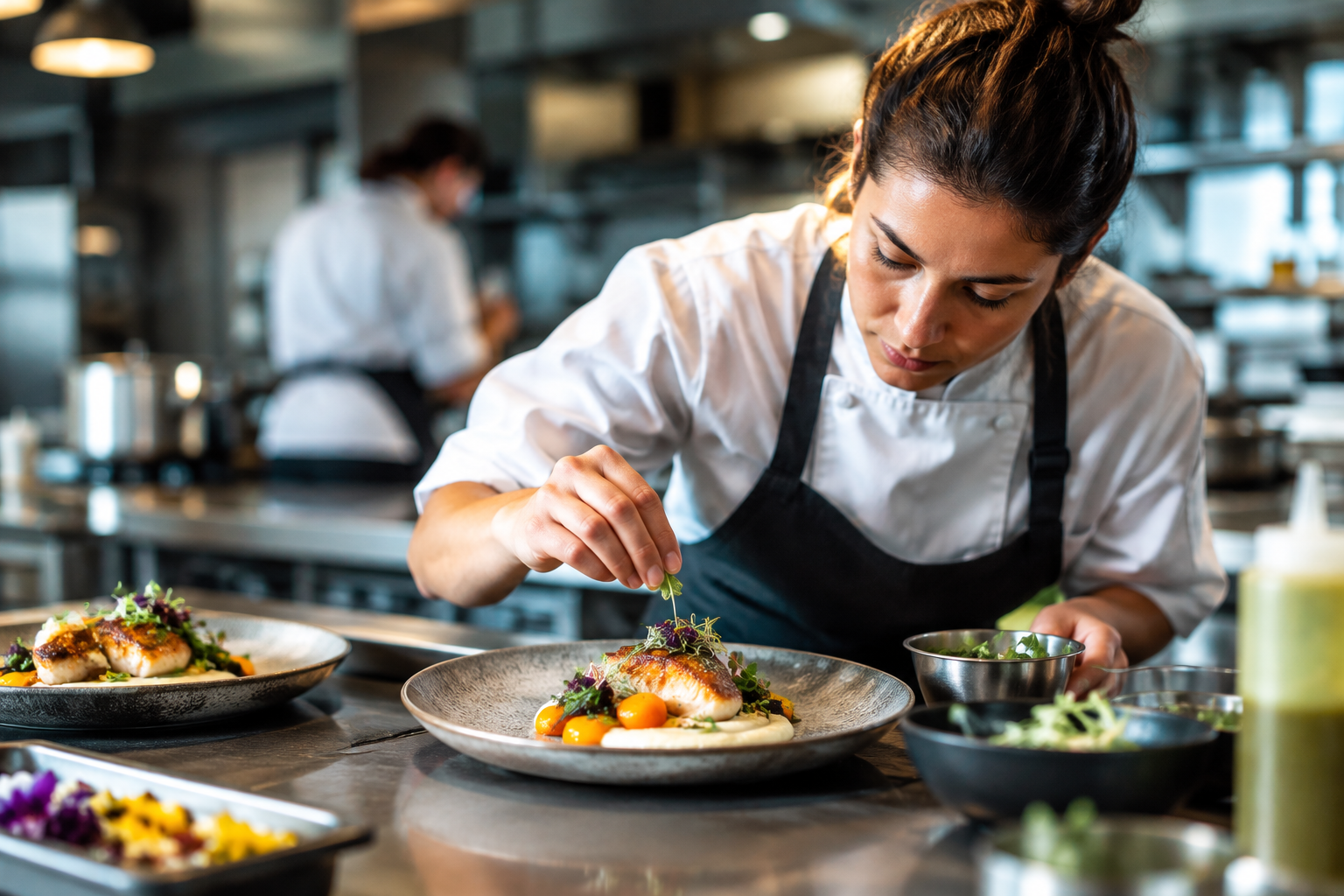
The culinary profession is far more expansive than preparing food according to a recipe. It combines technical precision, sensory awareness, creativity, organization, hospitality, and an instinctive understanding of how ingredients behave. A culinary artist transforms raw materials into dishes that can nourish, intrigue, comfort, and even evoke memories. Behind every carefully plated entrée, fragrant pastry, elegant canapé, or meticulously prepared tasting menu is a professional who understands that cooking is both a craft and a discipline.
A culinary artist job description therefore encompasses considerably more than the basic responsibility of cooking. Depending on the workplace, a culinary artist may develop menus, prepare ingredients, manage kitchen stations, test recipes, supervise food presentation, maintain sanitation standards, control portions, coordinate with service teams, and contribute ideas to an establishment’s culinary identity.
The profession can be found across restaurants, hotels, resorts, catering companies, private households, cruise ships, institutional kitchens, food production businesses, culinary schools, and hospitality enterprises. Some culinary artists specialize in a particular cuisine, while others cultivate broad expertise across multiple gastronomic traditions.
Understanding the responsibilities, qualifications, working environment, and career possibilities associated with this profession provides a useful foundation for anyone interested in entering the culinary arts.
What Is a Culinary Artist?
A culinary artist is a food professional who uses cooking techniques, ingredients, presentation methods, and creative judgment to produce dishes or complete dining experiences. The title can describe different positions depending on the employer. In one establishment, it may refer to a chef responsible for creative menu development. In another, it could describe a specialized cook, pastry professional, private chef, food stylist, or culinary creator.
At the heart of the role is the ability to combine culinary arts definition principles with practical kitchen expertise.
The culinary arts encompass the preparation, cooking, presentation, and appreciation of food. They incorporate knowledge of ingredients, flavor development, culinary techniques, nutrition, food safety, cultural traditions, kitchen management, and aesthetics.
A culinary artist does not simply ask whether food is edible. The professional considers whether it is balanced, appropriately seasoned, visually appealing, properly textured, efficiently produced, and suitable for the intended guest.
That distinction is important.
A technically correct dish may satisfy hunger, while an expertly conceived dish can create a memorable culinary experience.
Culinary Artist Job Description at a Glance
Although duties vary by position, a typical culinary artist may be responsible for:
- Preparing ingredients according to established recipes and specifications
- Cooking dishes using appropriate culinary techniques
- Creating or adapting recipes
- Developing menus and seasonal specials
- Selecting and evaluating ingredients
- Maintaining consistent food quality
- Presenting dishes attractively
- Monitoring food portions and waste
- Following food safety and sanitation procedures
- Organizing a workstation efficiently
- Coordinating with chefs, servers, managers, and other kitchen employees
- Managing cooking times during busy service periods
- Testing new ingredients and flavor combinations
- Maintaining kitchen equipment
- Recording recipes and preparation procedures
- Contributing to cost-control initiatives
- Training or supervising junior kitchen staff when required
The exact responsibilities depend heavily on seniority.
An entry-level culinary professional may spend much of the day performing preparation and station work, whereas an experienced culinary artist might spend significant time developing menus, directing kitchen operations, or designing signature dishes.
Core Responsibilities of a Culinary Artist
1. Ingredient Preparation
Preparation is one of the fundamental components of professional cooking.
Vegetables must be cleaned, peeled, cut, and stored correctly. Meat may require trimming, portioning, marinating, or other preparation. Fish must be handled carefully to preserve freshness and texture. Herbs, spices, sauces, stocks, doughs, and garnishes often need to be prepared before service begins.
Professional kitchens frequently rely on mise en place, a French culinary concept meaning that ingredients and equipment are organized and prepared before cooking begins.
Good preparation creates rhythm.
When a kitchen station is properly arranged, the culinary artist can concentrate on execution rather than searching for ingredients or improvising basic preparation during a busy service.
2. Cooking and Recipe Execution
The central responsibility remains cooking.
A culinary artist may roast, grill, braise, sauté, steam, poach, fry, bake, smoke, ferment, or otherwise transform ingredients. Different foods demand different techniques, temperatures, timings, and handling methods.
Precision matters.
A few additional minutes of cooking can alter the texture of vegetables. Excessive heat can destroy delicate flavors. Improper temperature control can ruin a sauce or cause proteins to become dry.
Professional culinary work therefore requires an understanding of how heat, moisture, acidity, fat, salt, sugar, and time interact.
3. Menu Development
Experienced culinary artists may contribute to menu creation.
This can involve identifying seasonal ingredients, analyzing customer preferences, developing new recipes, calculating ingredient costs, and determining appropriate portion sizes.
A successful menu must often balance creativity with practicality.
A spectacular dish that takes forty minutes to prepare may be unsuitable for a restaurant serving hundreds of guests during a short dinner period. Similarly, an inexpensive ingredient can become valuable when transformed through sophisticated technique.
Menu development is therefore both artistic and logistical.
4. Food Presentation
Visual presentation is another significant element of the culinary profession.
Plate composition involves color, shape, height, texture, negative space, portion size, and arrangement. Garnishes should generally contribute purpose rather than exist merely as decoration.
A culinary artist may consider whether a dish appears balanced before the first bite is taken.
This is particularly important in fine dining, hospitality, events, food photography, and contemporary restaurants, where visual aesthetics can strongly influence the perception of a meal.
5. Quality Control
Consistency separates professional kitchen production from casual home cooking.
Guests expect the same dish to meet established standards every time they order it. Culinary artists must therefore monitor seasoning, texture, temperature, appearance, portion size, and ingredient quality.
Quality control can also involve tasting sauces, checking produce, inspecting cooked proteins, and ensuring that prepared food is stored appropriately.
Attention to minute details can have an outsized impact.
The Skills Required for a Culinary Artist
A successful culinary artist combines practical abilities with interpersonal and organizational skills.
Knife Skills
Knife proficiency is fundamental. Culinary professionals need to cut ingredients efficiently and consistently while maintaining safety.
Uniform cuts are not merely aesthetic. They can also promote more even cooking.
Palate Development
A trained palate helps culinary professionals identify seasoning deficiencies, excessive acidity, bitterness, sweetness, saltiness, or other imbalances.
Taste becomes a professional instrument.
Creativity
Creativity allows culinary artists to develop distinctive dishes and reinterpret familiar ingredients.
Innovation can involve combining cuisines, changing textures, experimenting with preparation methods, or discovering unexpected ingredient pairings.
Time Management
Restaurants and catering operations frequently function under strict time constraints.
A culinary artist may need to coordinate several preparations simultaneously while maintaining quality. Prioritization and sequencing become essential.
Communication
Professional kitchens depend on communication.
Culinary artists may need to communicate with chefs, cooks, servers, suppliers, managers, and customers. Clear instructions can prevent mistakes and keep service moving.
Adaptability
Ingredients may become unavailable. Equipment may malfunction. Orders may arrive unexpectedly. Guests may have dietary restrictions.
A capable culinary professional must adapt without allowing disruptions to compromise food safety or quality.
Attention to Detail
Small differences matter in cooking.
A sauce may require slightly more acidity. A garnish may need repositioning. A protein may require additional resting time.
The ability to notice subtle discrepancies is valuable at every level of the profession.
Education and Training
There is no single route into culinary work.
Some professionals begin in entry-level kitchen positions and acquire expertise through practical experience. Others attend culinary schools, hospitality programs, vocational institutions, or college-level culinary programs.
Formal education can provide instruction in areas such as:
- Classical cooking techniques
- Baking and pastry
- Food safety
- Nutrition
- Menu planning
- Kitchen management
- International cuisines
- Food costing
- Hospitality operations
- Culinary theory
- Restaurant administration
Practical experience remains indispensable.
A classroom can explain the principles of sauce preparation, but a professional kitchen teaches timing, pressure management, communication, service coordination, and the realities of producing food repeatedly for customers.
Many culinary professionals therefore combine formal education with apprenticeships, internships, entry-level positions, and progressively responsible roles.
Culinary Artist Work Environment
The working environment can vary dramatically.
Restaurants
Restaurants are perhaps the most recognizable workplace. Culinary artists may work in casual restaurants, fine-dining establishments, cafés, bakeries, gastropubs, or specialty dining venues.
Hotels and Resorts
Hotels often employ large culinary teams serving restaurants, room service, banquets, conferences, weddings, and special events.
Catering Companies
Catering requires exceptional logistical ability. Food may need to be prepared in one location and transported to another while maintaining appropriate temperature, appearance, and quality.
Private Kitchens
Private chefs work directly for individuals, families, executives, or special events. This environment can offer opportunities for personalized menus and highly customized culinary experiences.
Cruise Ships
Cruise ships may employ large culinary teams serving thousands of passengers. The work can be demanding but provides exposure to international hospitality environments.
Institutional Food Service
Hospitals, schools, universities, corporate cafeterias, and other institutions also require skilled culinary professionals.
The emphasis in these settings may differ from fine dining, with greater attention to nutrition, consistency, volume, dietary requirements, and cost management.
Understanding the Meaning of Culinary Experience
The phrase culinary experience meaning extends beyond simply eating a meal.
A culinary experience can involve the complete sensory and emotional encounter surrounding food. Taste is obviously important, but aroma, texture, temperature, visual presentation, atmosphere, service, cultural context, and even storytelling can contribute to the experience.
Consider a traditional dish served in a family-style restaurant.
The experience may include the aroma of freshly prepared ingredients, the visual character of the dish, the sound of cooking, the hospitality of the staff, and the cultural history associated with the recipe.
Alternatively, a modern tasting menu might create an entirely different experience through sequential courses, unusual textures, carefully paired beverages, dramatic plating, and tableside preparation.
The culinary artist plays an important role in shaping these encounters.
Culinary Artist vs. Chef
The terms culinary artist and chef are sometimes used interchangeably, but they can describe different levels or dimensions of professional work.
A chef typically has substantial responsibility for kitchen operations, menu planning, staff supervision, inventory, food costs, and culinary standards.
A culinary artist may place greater emphasis on creativity, dish development, presentation, or specialized food preparation.
However, the boundaries are fluid.
An executive chef can certainly be a culinary artist. Likewise, a highly creative cook may possess strong artistic ability without holding a formal chef title.
Professional titles vary between organizations, making actual responsibilities more useful than titles alone when evaluating a position.
A Typical Day in the Life
The daily routine of a culinary artist depends on the workplace, but a restaurant professional might begin several hours before service.
The first tasks may involve inspecting ingredients, reviewing reservations, checking menus, organizing the workstation, and preparing sauces, stocks, vegetables, proteins, doughs, and garnishes.
As service approaches, the pace intensifies.
Stations become fully operational. Orders begin arriving. Timing becomes critical. Communication becomes concise and purposeful.
During peak service, culinary artists must maintain concentration while simultaneously monitoring several preparations.
After service, responsibilities may include cleaning stations, storing ingredients, labeling preparations, checking inventory, recording waste, and preparing for the next shift.
The work can be physically demanding. Culinary professionals often spend long periods standing, moving between stations, lifting supplies, working around heat, and maintaining concentration in noisy environments.
Yet the profession can also be deeply rewarding.
A successful service provides immediate evidence of craftsmanship.
Food Safety and Sanitation Responsibilities
Food safety is not optional in professional culinary environments.
Culinary artists must understand appropriate food storage, temperature control, cross-contamination prevention, personal hygiene, cleaning procedures, and safe food-handling practices.
They may also need to understand allergen management.
A guest with a serious food allergy depends on accurate communication and careful preparation. A seemingly minor mistake can have significant consequences.
Sanitation therefore forms part of professional culinary discipline rather than being a separate administrative task.
A clean workstation promotes efficiency, safety, organization, and professionalism.
Creativity and Culinary Innovation
Culinary creativity does not necessarily mean inventing bizarre combinations.
Sometimes innovation comes from refinement.
A culinary artist might take a traditional recipe and alter its texture while preserving its characteristic flavor. Another professional might introduce a regional ingredient into a familiar preparation. Someone else might simplify a complicated dish until its central flavors become more apparent.
Culinary innovation can involve:
- Ingredient substitution
- Modern plating
- Fermentation
- Preservation
- Regional reinterpretation
- Texture modification
- Seasonal menu development
- Cross-cultural influences
- Alternative cooking techniques
- Waste-reduction strategies
The most compelling innovation often respects the ingredient rather than overwhelming it.
Career Progression
Culinary careers can develop through numerous stages.
A common pathway might include:
Kitchen Assistant → Commis Chef → Chef de Partie → Sous Chef → Head Chef → Executive Chef
However, many alternative routes exist.
A culinary professional might specialize in pastry, become a private chef, work as a food stylist, develop recipes for food brands, teach culinary arts, become a consultant, or establish a restaurant.
Other possibilities include:
- Pastry chef
- Personal chef
- Private chef
- Catering chef
- Research and development chef
- Food stylist
- Culinary instructor
- Recipe developer
- Food product developer
- Restaurant consultant
- Culinary entrepreneur
- Food writer
- Hospitality manager
The breadth of these options illustrates why culinary arts can become a long-term professional discipline rather than simply an entry-level occupation.
Essential Professional Qualities
Technical expertise is important, but character also influences culinary success.
Discipline
Professional cooking requires repetition and consistency. Culinary artists must be willing to perform fundamental tasks correctly every day.
Curiosity
Curiosity encourages experimentation with unfamiliar ingredients, cuisines, techniques, and traditions.
Resilience
Kitchen environments can be intense. Resilience helps professionals remain focused during demanding service periods.
Humility
There is always something new to learn. Culinary traditions are vast, and even highly experienced chefs continue refining their skills.
Professionalism
Punctuality, cleanliness, reliability, teamwork, and respect are indispensable in a professional kitchen.
Passion for Food
Technical competence can produce a functional dish. Genuine interest in food can encourage deeper exploration of flavor, culture, technique, and hospitality.
Why Culinary Artists Matter
Food occupies a remarkable position in human culture.
It sustains people, marks celebrations, communicates identity, preserves traditions, and creates social connections. Culinary professionals participate in all of these dimensions.
A culinary artist may take ordinary ingredients and produce something memorable through technique and imagination.
That transformation is the essence of culinary craftsmanship.
Whether preparing a sophisticated tasting menu or producing hundreds of carefully portioned meals for a busy hospitality operation, culinary professionals contribute to experiences that people often remember long after the meal has ended.
Conclusion
A culinary artist job description encompasses much more than chopping ingredients and following recipes. It includes preparation, cooking, presentation, menu development, quality control, sanitation, communication, creativity, organization, and hospitality.
The profession demands both dexterity and imagination. Culinary artists must understand the mechanics of cooking while developing the sensory judgment required to recognize balance, texture, aroma, and visual harmony.
The broader culinary arts definition reveals why the field is so diverse. Culinary arts unite food preparation with craftsmanship, culture, science, creativity, and service. Within that expansive discipline, professionals can pursue numerous specialties and career directions.
At the same time, the culinary experience meaning demonstrates that food is rarely just about nourishment. A well-designed dish can become part of a larger experience involving atmosphere, memory, culture, presentation, and human connection.
For aspiring culinary professionals, the journey can begin with basic kitchen skills and gradually develop into a sophisticated career built around knowledge, discipline, creativity, and continuous learning.
The kitchen may be demanding, but it is also a place where ideas become tangible. Ingredients become dishes. Techniques become traditions. And ordinary meals can become extraordinary experiences.
Practical Job-Posting Template
Culinary Artist Job Posting Template
Job Title
Culinary Artist
Job Type
Full-Time / Part-Time / Contract
Location
[City, State/Country]
Department
Culinary / Food & Beverage / Kitchen Operations
Reports To
Executive Chef / Head Chef / Culinary Director
Job Overview
We are seeking a talented and enthusiastic Culinary Artist to join our culinary team. The ideal candidate will combine strong technical cooking abilities with creativity, attention to detail, and a genuine appreciation for quality ingredients and memorable dining experiences.
The successful candidate will be responsible for preparing and presenting high-quality dishes, maintaining consistent culinary standards, supporting menu development, and contributing to a clean, organized, and collaborative kitchen environment.
Key Responsibilities
- Prepare and cook dishes according to established recipes and quality standards.
- Assist with menu development, recipe testing, and seasonal culinary concepts.
- Select, prepare, portion, and store ingredients appropriately.
- Demonstrate proficient knife skills and professional cooking techniques.
- Maintain consistent flavor, texture, temperature, and presentation.
- Create visually appealing plates while maintaining appropriate portion control.
- Follow food safety, sanitation, allergen, and hygiene requirements.
- Maintain a clean and organized workstation throughout food preparation and service.
- Coordinate effectively with chefs, kitchen colleagues, servers, and management.
- Monitor ingredient quality and report damaged, expired, or unsuitable products.
- Help minimize food waste through accurate preparation and responsible ingredient use.
- Operate kitchen equipment safely and efficiently.
- Support special events, private functions, catering operations, or seasonal menus when required.
- Contribute creative ideas for new dishes, flavor combinations, and culinary presentations.
- Assist with inventory management and food-cost control.
- Maintain professional standards during busy service periods.
Required Qualifications
- Previous professional kitchen or culinary experience preferred.
- Knowledge of fundamental cooking techniques and food preparation.
- Understanding of food safety and sanitation practices.
- Strong organizational and time-management skills.
- Ability to work efficiently in a fast-paced kitchen.
- Excellent attention to detail.
- Ability to communicate effectively and work as part of a culinary team.
- Physical ability to stand for extended periods and perform routine kitchen duties.
- Culinary education, certification, or equivalent practical experience is an advantage.
Preferred Qualifications
- Culinary school or hospitality qualification.
- Experience in fine dining, hotels, catering, resorts, or specialty restaurants.
- Experience with menu development or recipe creation.
- Knowledge of international cuisines and contemporary culinary techniques.
- Familiarity with food-cost management and portion control.
- Experience accommodating dietary restrictions and allergen-sensitive requirements.
Key Skills
Technical Skills:
Knife handling, cooking techniques, food preparation, plating, recipe execution, ingredient handling, sanitation, and kitchen equipment operation.
Creative Skills:
Flavor development, menu ideation, food presentation, ingredient pairing, recipe experimentation, and culinary innovation.
Professional Skills:
Teamwork, communication, adaptability, time management, discipline, organization, and problem-solving.
Working Environment
The Culinary Artist will work in a professional kitchen environment that may involve high temperatures, extended periods of standing, repetitive preparation tasks, and fast-paced service periods. The position may require flexible scheduling, including evenings, weekends, holidays, and special events.
Compensation and Benefits
Salary: [Insert Salary Range]
Benefits may include:
- Health insurance
- Paid time off
- Employee meals
- Staff discounts
- Retirement or savings plan
- Professional development opportunities
- Culinary training
- Performance incentives
How to Apply
Interested candidates should submit:
- Updated résumé/CV
- Brief cover letter
- Relevant culinary certifications, if applicable
- Portfolio or examples of culinary work, if available
Please send applications to [Email Address] with the subject line “Culinary Artist Application – [Applicant Name]”.
Equal Opportunity Statement
[Company Name] is committed to maintaining a professional, respectful, and inclusive workplace. Employment decisions are based on qualifications, experience, professional capabilities, and organizational requirements.
Employer Information
Company: [Company Name]
Location: [City, State/Country]
Website: [Website]
Contact: [Hiring Manager/Recruitment Team]
Application Deadline: [Date]
Culinary Artist
Location: [City, State/Country]
Job Type: Full-Time / Part-Time
Department: Culinary / Food & Beverage
Reports To: Executive Chef / Head Chef
About the Role
We are seeking a creative and skilled Culinary Artist to join our culinary team. The ideal candidate will have a passion for quality food, strong cooking skills, excellent attention to detail, and the ability to thrive in a fast-paced professional kitchen.
Key Responsibilities
- Prepare and cook high-quality dishes according to recipes and standards.
- Assist with menu development and recipe testing.
- Prepare, portion, and store ingredients safely.
- Maintain consistent flavor, quality, presentation, and portion sizes.
- Apply professional cooking and plating techniques.
- Follow food safety, sanitation, and allergen-control procedures.
- Maintain a clean, organized, and efficient workstation.
- Collaborate with chefs and kitchen staff during daily service.
- Monitor ingredient quality and help reduce food waste.
- Contribute creative ideas for dishes, flavors, and presentations.
Qualifications
- Previous culinary or professional kitchen experience preferred.
- Knowledge of fundamental cooking techniques and food safety.
- Strong teamwork, communication, and time-management skills.
- Creativity and an appreciation for food presentation.
- Ability to work efficiently under pressure.
- Culinary education or certification is an advantage.
What We Offer
- Competitive salary: [Salary Range]
- [Benefits Package]
- Staff meals or discounts
- Training and professional development
- Opportunities for career advancement
- A collaborative and creative culinary environment
How to Apply
Submit your résumé/CV and a brief cover letter to [Email Address]. Include “Culinary Artist Application” in the subject line.
Application Deadline: [Date]
Company: [Company Name]
Location: [Location]
Contact: [Hiring Manager / Recruitment Team]