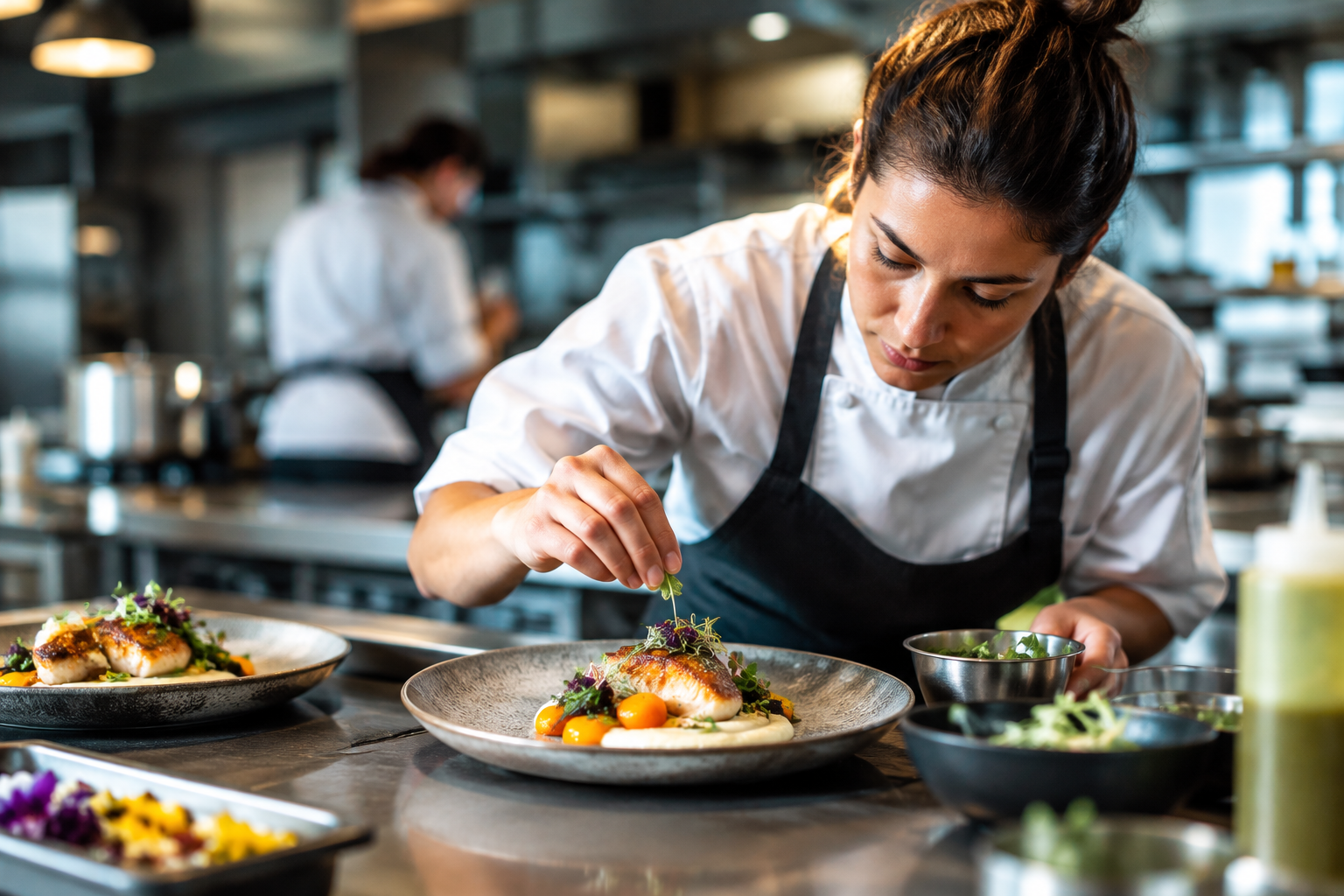
Culinary arts is much more than cooking food in a professional kitchen. It is a multifaceted discipline that combines food preparation, culinary technique, creativity, presentation, hospitality, nutrition, organization, and an understanding of ingredients. From preparing a simple breakfast to designing an elaborate tasting menu, culinary professionals transform raw ingredients into food that can nourish, delight, and create memorable experiences.
For anyone asking what does culinary arts mean, the answer begins with the broad practice of preparing and presenting food professionally or creatively. Culinary arts encompass everything from knife skills and cooking methods to menu development, plating, food safety, kitchen management, and the cultural traditions surrounding cuisine.
People working in this field can follow many different paths. Some become chefs, while others specialize in pastry, catering, private dining, food styling, recipe development, culinary education, or food product development.
The possibilities are extensive.
What Is Culinary Arts?
The question what is culinary arts can be answered simply: culinary arts is the professional and creative practice of preparing, cooking, presenting, and serving food.
However, that definition only scratches the surface.
Culinary arts involve an intricate relationship between ingredients, technique, sensory perception, culture, science, and hospitality. A culinary professional must understand how ingredients behave under different conditions and how cooking techniques influence flavor, texture, aroma, appearance, and nutritional characteristics.
For example, roasting vegetables produces a different result from steaming them. Sautéing onions can create caramelized sweetness, while boiling them produces an entirely different texture and flavor profile.
The culinary artist understands these transformations and uses them deliberately.
The discipline can include:
- Food preparation
- Cooking techniques
- Baking and pastry
- Menu planning
- Food presentation
- Recipe development
- Flavor pairing
- Food safety
- Kitchen management
- Nutrition
- Ingredient selection
- Hospitality
- Culinary entrepreneurship
In other words, culinary arts unite technical competence with creative judgment.
What Do You Actually Do in Culinary Arts?
The daily responsibilities of a culinary professional depend on the specific position.
A restaurant chef may prepare food, supervise kitchen staff, design menus, monitor inventory, and maintain quality standards. A pastry chef may spend the day preparing doughs, creams, chocolates, cakes, and decorative components.
A catering professional may coordinate large-scale food production for weddings, corporate functions, or private celebrations.
A private chef may design highly personalized menus based on a client’s preferences and dietary requirements.
Despite these differences, most culinary roles involve several fundamental activities.
Preparing Ingredients
Ingredient preparation is one of the first responsibilities in a professional kitchen.
Vegetables may need washing, peeling, trimming, slicing, dicing, julienning, or chopping. Meat may require trimming, portioning, marinating, or seasoning. Fish must be cleaned and handled carefully.
Other preparations can include:
- Stocks
- Sauces
- Marinades
- Dressings
- Doughs
- Batters
- Purees
- Garnishes
- Spice blends
- Pickles
- Fermented ingredients
Professional kitchens often organize these preparations through mise en place, a French term associated with having ingredients and equipment properly prepared before service.
Good mise en place creates efficiency.
Instead of scrambling for ingredients during a busy service, the culinary professional knows exactly where everything is and how much preparation has already been completed.
Cooking Food Using Different Techniques
Cooking is obviously central to culinary arts, but professional cooking involves much more than following a recipe.
Different ingredients require different methods.
Common culinary techniques include:
- Roasting
- Baking
- Grilling
- Broiling
- Sautéing
- Frying
- Braising
- Steaming
- Poaching
- Smoking
- Simmering
- Blanching
- Fermenting
- Sous vide cooking
Each technique creates distinct sensory characteristics.
Roasting can intensify sweetness and produce desirable browning. Steaming can preserve delicate textures. Braising can transform tougher cuts of meat into tender preparations through prolonged cooking in liquid.
Understanding these distinctions is part of professional culinary competence.
Developing Recipes
Culinary professionals may also create recipes.
Recipe development requires experimentation, measurement, sensory evaluation, and repetition. A chef might begin with a broad idea and gradually refine it until the final dish reaches the desired balance.
This can involve adjusting:
- Salt
- Acidity
- Sweetness
- Fat
- Spice
- Texture
- Cooking temperature
- Cooking time
- Portion size
- Presentation
The process can be surprisingly analytical.
A dish may taste good but still require modification because it is too expensive to produce, takes too long to prepare, or cannot be consistently replicated during busy service.
Recipe development therefore combines creativity with practicality.
Creating Menus
Menu development is another important part of culinary work.
A menu needs to satisfy customers while remaining operationally feasible. Culinary professionals consider ingredient availability, seasonality, food costs, kitchen capacity, preparation time, customer expectations, and the overall identity of the establishment.
A restaurant specializing in regional cuisine may build its menu around local ingredients and traditional techniques.
A contemporary restaurant might instead emphasize experimentation, unusual flavor combinations, or modern presentation.
Menu development can also involve seasonal changes.
Summer menus may highlight fresh vegetables, fruit, herbs, and lighter preparations, while winter menus may emphasize hearty soups, braises, roasted meats, and warming spices.
Presenting Food
Food presentation is an important element of modern culinary arts.
Before tasting a dish, diners see it.
Plate composition can influence expectations about flavor, quality, freshness, and sophistication. Culinary professionals therefore consider elements such as color, shape, proportion, height, texture, contrast, and negative space.
A garnish should ideally have a culinary purpose rather than simply occupy space.
Microgreens, herbs, edible flowers, sauces, purees, crisps, and other components can be used to enhance both appearance and flavor.
The best presentation often looks effortless even though considerable precision may have gone into creating it.
Maintaining Food Quality
Consistency is one of the defining characteristics of professional culinary work.
A restaurant guest expects the same dish to be enjoyable whether it is ordered on Monday evening or Saturday night.
Culinary professionals therefore monitor:
- Taste
- Temperature
- Texture
- Portion size
- Appearance
- Ingredient freshness
- Cooking accuracy
- Seasoning
- Plating standards
Quality control may also involve tasting sauces, inspecting ingredients, checking storage conditions, and ensuring that recipes are followed correctly.
Small deviations can become noticeable when a dish is prepared hundreds of times.
Food Safety and Hygiene
Culinary arts also involve substantial responsibility for food safety.
Professionals must understand appropriate food-handling procedures, temperature control, cross-contamination prevention, personal hygiene, cleaning routines, and safe storage.
Allergen awareness is particularly important.
A culinary professional may need to prepare meals without specific ingredients such as nuts, dairy, eggs, gluten, shellfish, or other allergens. Accurate communication and careful preparation are essential.
Sanitation is therefore not merely housekeeping.
It is an integral part of culinary professionalism.
What Is the Meaning of Culinary Skills?
The meaning of culinary skills refers to the practical abilities required to prepare, cook, present, and manage food effectively.
These skills range from basic kitchen abilities to highly specialized professional techniques.
Knife Skills
Knife skills are foundational.
Professionals need to handle knives safely while producing consistent cuts efficiently. Different cuts can influence both cooking time and presentation.
Cooking Skills
Culinary professionals need to understand heat control and cooking methods.
Knowing how to sear a steak is different from knowing how to braise one. Baking also requires a different mindset because measurements, ratios, temperature, and chemical reactions often have greater importance.
Seasoning Skills
A trained palate helps professionals determine whether a dish requires more salt, acidity, sweetness, spice, or another balancing component.
Seasoning is not simply about adding salt.
It is about achieving harmony among multiple flavors.
Plating Skills
Professionals must understand how to arrange food attractively while preserving practicality and appropriate portion sizes.
Time Management
A professional kitchen can be frenetic.
Several dishes may need to be prepared simultaneously, with different cooking times and service requirements.
Time management allows culinary professionals to sequence tasks efficiently.
Organization
Organization keeps a kitchen functional.
Ingredients must be stored correctly. Tools need to be accessible. Workstations must remain clean and efficient.
Communication
Cooking in a professional environment is rarely an individual activity.
Chefs, cooks, servers, managers, dishwashers, suppliers, and other employees must coordinate their activities.
Clear communication helps prevent errors and delays.
Baking and Pastry Arts
Culinary arts extend well beyond savory cooking.
Baking and pastry represent specialized branches of the field.
Pastry professionals may create:
- Cakes
- Tarts
- Croissants
- Bread
- Cookies
- Chocolates
- Mousses
- Custards
- Pies
- Desserts
- Confections
Pastry often demands exceptional precision.
A small change in ingredient ratios can significantly affect the final product. Temperature, humidity, fermentation, mixing techniques, and timing can all influence results.
This makes pastry both an artistic and technical discipline.
Working in Restaurants
Restaurants provide one of the most recognizable career environments for culinary professionals.
Kitchen positions can include:
- Kitchen assistant
- Commis chef
- Chef de partie
- Sous chef
- Head chef
- Executive chef
Entry-level employees may focus on preparation and station support.
As professionals gain experience, their responsibilities can expand into menu development, staff supervision, inventory management, purchasing, quality control, and kitchen leadership.
Restaurant work can be intense.
Service periods often require speed, concentration, coordination, and resilience.
Yet the environment also provides continuous opportunities to refine culinary technique.
Working in Hotels and Resorts
Hotels and resorts often operate several food-service outlets simultaneously.
A culinary professional might work in:
- Fine-dining restaurants
- Casual restaurants
- Buffets
- Room service
- Banquet kitchens
- Poolside restaurants
- Conference catering
- Wedding events
- Specialty dining venues
This environment can provide broad exposure to different styles of food production.
Large hotels may also employ extensive culinary teams with specialized departments for pastry, banquet production, garde manger, butchery, and other areas.
Catering and Events
Catering requires a different form of culinary expertise.
Instead of preparing food exclusively for customers seated in a restaurant, catering professionals may produce meals for dozens, hundreds, or even thousands of guests.
Planning becomes crucial.
Ingredients must be purchased in appropriate quantities. Preparation schedules must be coordinated. Food must often be transported while maintaining safety and quality.
Catering also requires flexibility because events can change unexpectedly.
A successful catering professional must combine culinary skill with logistical acumen.
Private and Personal Chefs
Private chefs prepare meals for individuals, families, executives, vacation properties, or exclusive events.
The work can be highly personalized.
A private chef may develop menus around a client’s favorite cuisines, dietary preferences, nutritional goals, lifestyle, or schedule.
This role often requires strong interpersonal skills because the culinary professional interacts more directly with the client.
The chef is not simply producing food.
The chef is creating a personalized dining experience.
Culinary Education
Some culinary professionals eventually become instructors.
Culinary educators may teach students about:
- Basic cooking techniques
- Food safety
- International cuisine
- Baking
- Menu development
- Knife skills
- Kitchen management
- Food presentation
- Nutrition
- Hospitality
Teaching requires more than culinary knowledge.
An instructor must be able to explain techniques clearly, demonstrate procedures, provide constructive feedback, and adapt instruction to different learning levels.
Food Styling and Recipe Development
Culinary skills can also lead into creative media.
Food stylists prepare dishes specifically for photography, advertising, packaging, television, magazines, cookbooks, and digital media.
The food may need to look particularly appealing under studio lighting.
Recipe developers create and test recipes for publications, food companies, websites, restaurants, and brands.
These careers demonstrate that culinary expertise is not confined to the restaurant kitchen.
Culinary Entrepreneurship
Experienced culinary professionals may eventually establish their own businesses.
Potential ventures include:
- Restaurants
- Bakeries
- Food trucks
- Catering companies
- Private-chef services
- Specialty food brands
- Cooking schools
- Culinary consulting businesses
- Food content businesses
Entrepreneurship introduces additional responsibilities.
Business owners must consider budgeting, marketing, staffing, purchasing, customer service, licensing, operations, and financial management.
A talented cook therefore needs to develop commercial awareness when moving into business ownership.
Creativity in Culinary Arts
Creativity is one of the most fascinating aspects of culinary work.
It can involve creating a completely new dish, but it can also mean finding a better way to prepare a familiar ingredient.
A chef might reinterpret a traditional recipe, incorporate a seasonal ingredient, experiment with fermentation, explore contrasting textures, or use an unconventional cooking method.
Creativity can be subtle.
Sometimes the most innovative dish is not the most elaborate one. It may simply express an ingredient with unusual clarity.
Understanding Flavor
Flavor knowledge is central to culinary development.
Professionals learn how different ingredients interact and how contrasting or complementary flavors can be balanced.
Common flavor dimensions include:
- Sweet
- Salty
- Sour
- Bitter
- Umami
- Spicy
- Aromatic
- Earthy
- Floral
- Smoky
Texture also matters.
A dish can become more interesting when crisp, creamy, tender, chewy, or crunchy components interact.
Temperature creates another layer of contrast.
A warm dessert paired with a cold element, for example, can produce a more complex sensory experience.
The Science Behind Cooking
Culinary arts are strongly connected to science.
Heat changes proteins. Acids alter textures and flavors. Emulsification brings together liquids that normally separate. Fermentation uses microorganisms to transform ingredients.
Baking is particularly dependent on scientific principles.
Yeast produces gas that helps dough rise. Gluten contributes structure to bread. Heat triggers browning reactions that create complex aromas and flavors.
Understanding these processes helps culinary professionals troubleshoot problems instead of simply repeating instructions.
A Typical Day in Culinary Arts
There is no universal culinary schedule, but a professional kitchen might begin with preparation several hours before service.
The team checks ingredients and equipment, organizes workstations, prepares sauces and stocks, portions proteins, cuts vegetables, prepares garnishes, and reviews the day’s menu.
As service approaches, the kitchen becomes increasingly active.
Orders begin arriving.
Timing becomes crucial.
A culinary professional may need to monitor several pans, ovens, sauces, and plates simultaneously while communicating with colleagues.
After service, cleaning, storage, inventory checks, waste monitoring, and preparation for the next shift may follow.
It is demanding work.
It is also highly tangible: the results of the day’s effort are visible, aromatic, and immediately experienced.
Essential Qualities for Culinary Professionals
Technical knowledge is only part of success in culinary arts.
Discipline
Professional kitchens depend on consistency.
Creativity
Creative thinking encourages innovation and adaptation.
Patience
Mastering culinary techniques takes repetition.
Resilience
Busy kitchens can create considerable pressure.
Curiosity
Curiosity encourages exploration of ingredients, cultures, and techniques.
Teamwork
A kitchen operates as an interconnected system.
Attention to Detail
Minute differences can affect the final dish.
Professionalism
Reliability, punctuality, cleanliness, and respect contribute to a productive kitchen culture.
Career Opportunities in Culinary Arts
The culinary field offers a broad spectrum of careers.
Possible positions include:
| Career | Primary Focus |
|---|---|
| Chef | Kitchen leadership and food production |
| Sous Chef | Kitchen supervision and daily operations |
| Pastry Chef | Desserts, bread, and pastry |
| Private Chef | Personalized dining |
| Catering Chef | Large-scale events and functions |
| Recipe Developer | Creating and testing recipes |
| Food Stylist | Preparing food for visual media |
| Culinary Instructor | Teaching culinary techniques |
| Research Chef | Developing new food products |
| Restaurant Consultant | Improving culinary and operational systems |
| Food Entrepreneur | Building culinary businesses |
The field can therefore accommodate different personalities and interests.
Someone who loves fast-paced service may thrive in a restaurant. Another person who prefers experimentation might enjoy research and development. Someone with a passion for teaching may eventually move into culinary education.
Why Culinary Arts Matter
Food is deeply embedded in human life.
It connects families, communities, cultures, celebrations, traditions, and commerce. Culinary professionals help preserve traditional recipes while also creating new forms of expression.
A meal can be practical, but it can also be ceremonial.
It can communicate hospitality. It can preserve heritage. It can introduce someone to an unfamiliar culture.
This broader significance helps explain why culinary arts continue to attract people who view cooking not merely as a job but as a craft.
Conclusion
So, what is culinary arts? It is the broad discipline of preparing, cooking, presenting, and understanding food through technical skill, creativity, knowledge, and hospitality.
For anyone wondering what does culinary arts mean, the answer extends far beyond standing behind a stove. Culinary arts involve ingredient selection, food preparation, cooking techniques, menu development, plating, food safety, kitchen organization, flavor development, and the creation of memorable dining experiences.
The meaning of culinary skills is equally expansive. These skills include knife handling, cooking, seasoning, baking, plating, organization, communication, time management, and sensory judgment.
From restaurants and hotels to private kitchens, catering companies, culinary schools, media studios, and food businesses, culinary professionals can build careers in many environments.
At its heart, culinary work is transformation.
Raw ingredients become finished dishes. Techniques become expressions of creativity. Recipes become traditions. And meals become experiences.
That combination of craftsmanship, imagination, discipline, and human connection is what makes culinary arts such a dynamic and enduring field.
A concise career-path section can fit naturally after the career opportunities section:
Culinary Arts Career-Path Summary
A culinary career can begin with foundational kitchen experience and develop into specialized or leadership roles. A typical progression may look like:
Kitchen Assistant → Commis Chef → Chef de Partie → Sous Chef → Head Chef → Executive Chef
Along the way, culinary professionals can specialize in areas such as pastry, catering, private dining, recipe development, food styling, culinary education, or food product research.
Career advancement typically comes through a combination of hands-on experience, technical training, culinary education, leadership ability, creativity, and consistent performance. Some professionals eventually move beyond traditional kitchens to launch restaurants, catering businesses, food brands, consulting practices, or culinary education programs.
The path is flexible, allowing culinary professionals to shape their careers around their strengths, interests, and preferred working environment.